Meditation has been one of the most transformative parts of my life, especially when it comes to easing anxiety, rebuilding confidence, and slowly letting go of the version of myself that carried so much fear. Over the years, I’ve explored many different styles of Buddhist meditation, and each one has supported me in a unique way. If you’ve ever wondered which style might help you the most, you’re in the right place. And if you’re curious about my personal journey with meditation, you can read more on my About Me page.

Think of this as me simply sharing what has helped me along the way — what I’ve practiced, what I’ve learned, and what the research actually supports. My hope is that it gives you a clearer sense of the different forms of Buddhist meditation and helps you choose the one your mind might need most right now.
1. There Is No “One” Buddhist Meditation — There Are Many
Often when I say “I meditate,” people picture one sitting posture, one style, one experience. But actually, Buddhism offers many meditation styles—each with a slightly different aim. Some calm the nervous system, some cultivate insight, others open the heart. Knowing the differences helps you choose what your mind and body need in any given moment.
For example:
- On a highly anxious day my mind feels scattered—I might reach for a concentration (stability) practice.
- On a day when old memories come up and self-judgment starts creeping in, I might turn to a loving-kindness (compassion) practice.
- When sitting feels unbearable because of restlessness, I’ll get up and try walking meditation instead.
In short, each style serves a different purpose. It’s not about one being better than another — it’s about understanding what each practice offers. Traditional Buddhist teachings describe serenity (calm) and insight (awareness) meditations as distinct yet complementary, working together to support a balanced mind.
2. Mindfulness (Vipassana) Is the Foundation
When I first got into meditation seriously, I started with what many refer to as Vipassana, often translated as “insight” meditation—essentially, seeing things clearly.
What it involves
You train yourself to observe:
- your breath
- your thoughts
- sensations in the body
- emotions arising and passing
…without getting swept into them, without reacting.
Why it’s so helpful for anxiety
This style teaches you to notice anxiety instead of believing the anxious story. Over time, your nervous system learns that you’re not fused with the emotion — you’re the observer. That shift alone can loosen the grip of worry and rumination.
Research supports this too. A case report from Sri Lanka found that integrating Buddhist mindfulness into therapy improved emotional wellbeing. And a large neuroimaging meta-analysis showed that open-monitoring practices like Vipassana activate unique brain patterns, demonstrating that different meditation styles engage the mind in distinct ways.
How I do it, sometimes
When I practice Vipassana, I usually start by settling into a quiet spot — nothing fancy, just a few minutes where I can sit with myself. Even five minutes is enough. I let my attention rest on the breath and simply watch it rise and fall.
My mind always wanders. Sometimes it drifts to tomorrow’s worries or something I wish I’d done differently. When that happens, I don’t judge it. I just notice the thought and gently bring my focus back to the breath.
Other times, I widen my awareness and check in with my body — the tightness in my chest, the warmth in my hands, or that subtle hum of emotion under the surface. I don’t try to fix anything; I just watch it with curiosity.
When I’m done, I take a moment to quietly acknowledge myself for showing up, even if the practice felt messy. It’s my way of saying, “I’m here, and that’s enough.”
If you want to explore this foundation even more, you can learn more in my article on Different Types of Meditation for Beginners.
3. Concentration Meditation (Shamata) Builds Calm and Stability

When my mind feels like it’s on a trampoline — bouncing from thought to worry to fear — I often turn to Shamata, or “calm-abiding” meditation. This practice is all about stability. Instead of trying to silence the mind, it gives you something steady to rest on: the breath, the flicker of a candle, or even a simple visual point.
What I appreciate most is how gently it strengthens attention. The mind will wander — that’s normal — but each time you bring it back, you build a little more steadiness. Over time, the noise softens, the thoughts slow down, and you feel more anchored.
For me, Shamata feels like wrapping my nervous system in a warm blanket on the days everything feels scattered. It doesn’t ask for insights or big emotional breakthroughs. It simply teaches the mind how to rest and find a bit of calm in the chaos.
Why this matters
- Builds attentional muscle: the mind learns to hold—rather than chase.
- Calms the nervous system: reduced mental chatter, reduced reactivity.
- Great for anxious days where you don’t need deep insight, you need rest.
What the research says
Research backs up the unique calming power of Shamata. A large neuroimaging meta-analysis found that focused-attention practices — the kind where you rest your mind on a single object like the breath — activate specific brain regions involved in stabilizing attention and reducing mental wandering. In contrast, open-monitoring styles like Vipassana engage broader networks related to awareness and emotional processing.
In real life, this means concentration meditation doesn’t just feel different — it actually changes how your brain functions. Focused-attention strengthens the areas involved in staying present, filtering distractions, and quieting mental chatter. Some researchers even compare it to building an attentional “muscle.”
That’s why Shamata is so helpful on days when the mind won’t settle. You’re not forcing calm; you’re gently training your brain to return to center over and over until calm naturally emerges.
A simple Shamata practice
- Sit or lie down in a comfortable but alert posture.
- Choose your anchor (e.g., the exhale of the breath).
- Each time your mind drifts, gently return to your anchor.
- Start with 5–10 minutes; longer only if it feels sustainable.
- End with a moment of gratitude for your calm mind.
4. Loving-Kindness Meditation (Metta) Softens Inner Criticism

Some days the inner critic feels overwhelming — the voice that says “You messed up. You’re not enough.” I know that voice well, and it’s exhausting.
That’s why Metta, or loving-kindness meditation, has been so healing for me. It gently shifts the way you speak to yourself, replacing harshness with warmth. At first, even simple phrases like “May I be safe” felt uncomfortable, but over time the inner critic softened and lost its power.
Metta begins with offering kindness to yourself, then naturally expands to others. For anxiety, it feels like emotional medicine — helping you move out of hypervigilance and into a sense of inner safety.
How it helps anxiety
- Anxiety often comes wrapped in judgment (“I shouldn’t feel this”), fear (“What if this happens”), and self-criticism. Metta offers a counter-tone: “May I be safe. May I be kind to myself.”
- It activates the “soothing system” of the nervous system rather than the threat system.
- Makes meditation feel less like performance and more like friendship (with yourself).
A short Metta practice you can use
- Begin by placing one hand over your heart and taking a few calming breaths.
- Repeat silently: “May I be safe. May I be peaceful. May I be gentle with myself.”
- Then imagine someone you care about and repeat: “May you be safe. May you be peaceful.”
- Extend further to someone neutral or someone challenging: “May X be safe. May X be peaceful.”
- Finish by resting in whatever emotion or warmth arises.
5. Walking Meditation Helps When Sitting Feels Overwhelming
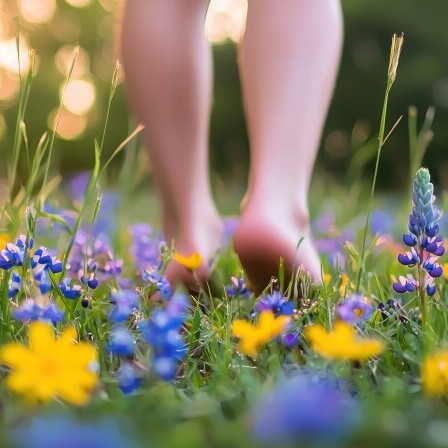
Some days, sitting still feels impossible — your leg bounces, your chest tightens, and your thoughts won’t slow down. I’ve had days where sitting meditation felt like trying to hold down a storm, and that’s exactly when walking meditation becomes a lifeline.
Instead of forcing stillness, walking meditation lets your body lead. Feeling your feet meet the ground, step by step, naturally steadies the breath and releases nervous energy.
When I practice it, I simply slow my pace enough to notice each part of the step. It’s like telling the mind, “You don’t have to be still — just be here.” And somehow, that’s enough.
On the days when anxiety feels too big, walking meditation brings me back to the present moment and reminds me that I don’t have to fight my restlessness — I can move with it.
Why it’s effective for anxiety and restlessness
- It combines movement (which uses up nervous energy) with mindful focus (which calms the mind).
- It grounds you back in the body rather than lost in future/past thoughts.
- It offers access to meditation even when the body protests sitting.
Walking Meditations: the potential role and challenges of walking meditation for Buddhist spiritual care by Kasper Meulesteen (2021) — This thesis explores how walking meditation supports Buddhist spiritual care, finding that it offers key benefits such as “grounding” and “de-centring” and engaging qualities like mindfulness, compassion, and concentration even when not seated.
Check out this video on walking meditation by Dr. Joe Dispenza
👇👇👇
6. Body Scan Meditation Reconnects You With Your Physical Self
A body scan meditation is a slow, intentional sweep of awareness through your entire body. Instead of focusing on the breath, you move your attention from one area to the next — noticing tension, sensation, temperature, or even the absence of feeling. You’re not trying to fix anything; you’re simply observing. It’s a gentle way to reconnect with your body when anxiety pulls you into your thoughts.
When I practice it, I lie down somewhere comfortable and imagine my awareness moving like a warm beam of light. I start at my toes and slowly work upward — feet, ankles, calves, knees, thighs, and hips — then move to the belly and chest, feeling each breath, before continuing into the arms, hands, neck, and jaw, ending around the eyes and forehead.
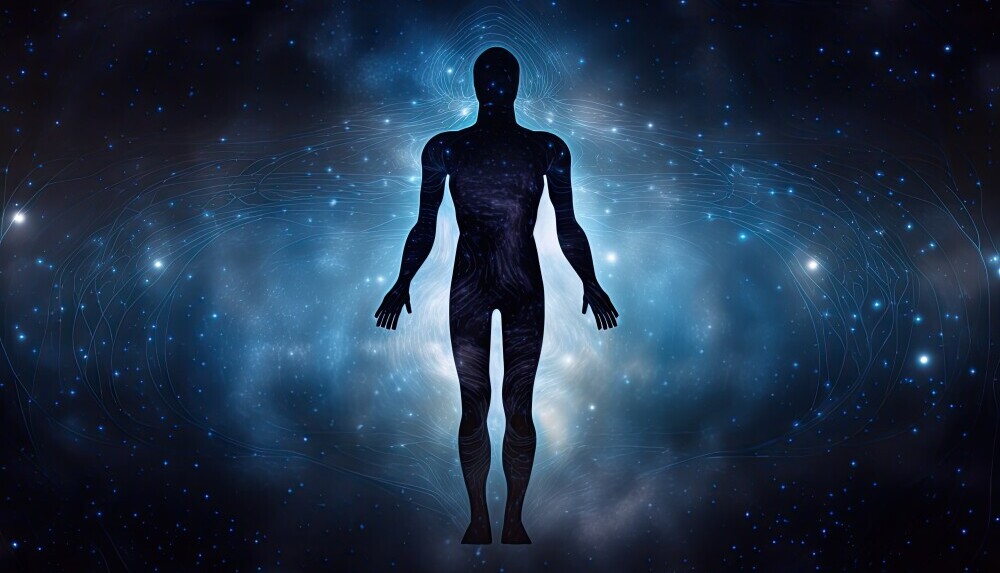
Sometimes I discover tension I didn’t even realize I was carrying — tight shoulders, a clenched stomach, or a jaw I’ve been holding all day. Instead of trying to change it, I just stay with the sensation and let it naturally soften. Over time, this simple act of noticing has become one of my most reliable ways to ground myself when anxiety shows up in my body rather than my mind.
Research highlight
Interestingly, research supports just how effective body-based practices can be. In a study conducted with Thai adolescents, breathing and visualization meditations — both of which involve body awareness — were strong predictors of improved mental-health outcomes. According to the findings, students who practiced these techniques regularly reported higher self-esteem and reduced symptoms of anxiety and stress, suggesting that reconnecting with the body plays a meaningful role in emotional regulation and overall wellbeing.
Quick tip for a mini body scan
- Lie down for 5 minutes.
- Choose one body part (e.g., feet) and bring full attention for 10 breaths.
- Move upward to the calves for 10 breaths, then knees, etc.
- If mind wanders: gently bring it back to the chosen body part.
- End by placing a hand on your belly and breathing into that area.
7. Choiceless Awareness Expands Your Sense of Inner Space
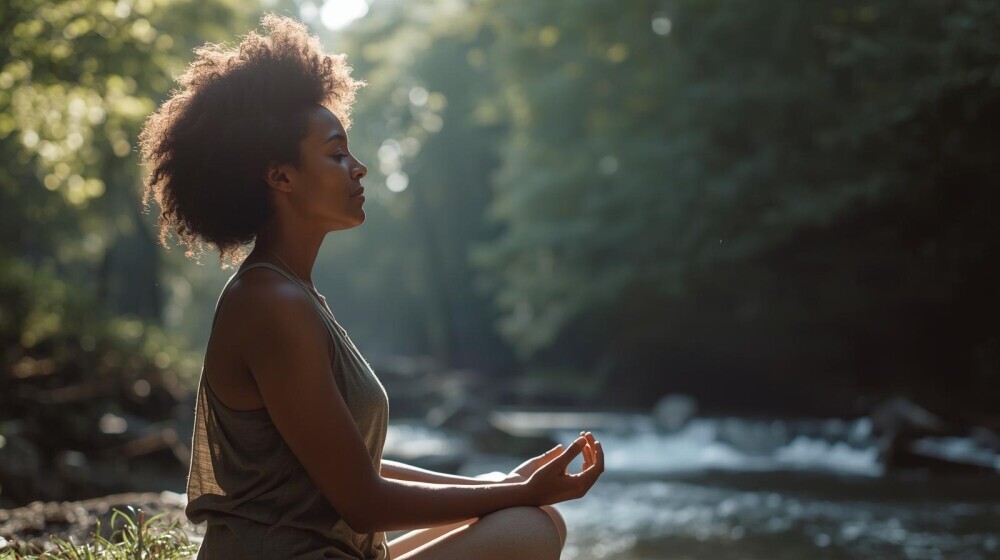
Choiceless awareness is a traditional Buddhist practice found in Zen, Vipassana, and Tibetan teachings. Instead of focusing on one thing, you let awareness rest on whatever arises — thoughts, sounds, sensations — without resisting or clinging.
It’s similar to Zen Shikantaza, where you simply sit and let the moment unfold. The power of this practice is its simplicity: you’re not trying to control anything; you’re allowing everything to be as it is.
For anxiety, choiceless awareness creates space. You begin to see thoughts as passing events rather than truths. That shift — from “I am anxious” to “Anxiety is here” — often brings a surprising sense of ease.
A short choiceless awareness “experiment”
- Sit quietly for 3–5 minutes.
- Begin with your breath to anchor.
- Then widen your attention: allow sounds, thoughts, sensations to pass through your field of awareness like clouds in the sky.
- Resist the instinct to judge or push away.
- If you notice you’ve followed a thought, gently return to non-doing awareness.
8. Visualization Meditation Rewires Emotional Patterns

Visualization meditation might feel more “creative” than traditional practices, but it’s actually rooted in Buddhist traditions — especially Tibetan Buddhism, where visualizing light, compassion, or peaceful imagery is a core method for cultivating calm and inner strength. Even early Buddhist teachings used simple imagery, like imagining the breath as a soft light, to steady the mind.
The reason this works is because the mind responds strongly to imagery. When you picture light filling your body or imagine compassion radiating from your chest, you’re teaching your nervous system what safety and ease feel like. Over time, those inner states become easier to access naturally.
How I use it
When anxiety has a strong hold, visualization gives the mind a new pattern to rehearse: calmness, safety, expansive awareness. For example:
- Visualise the breath as golden light entering your body on the inhale, darkness-worries leaving on the exhale.
- Imagine yourself as you want to be—confident, steady, kind—and feel that version of yourself for 1–2 minutes.
- Image the world you’re moving into: peaceful, compassionate, aligned with what you desire.
Quick visualization script
- 1 minute: settle in and breathe.
- 2 minutes: see yourself in soft light, standing in calm presence.
- 2 minutes: see that light radiating from your chest into the world around you.
- 1 minute: return to breath, rest.
Visualization is especially useful for healing past trauma and rewiring emotional patterns—something I personally found helpful during my own journey.
Putting It All Together: Choosing What You Need
Not sure which meditation to use today? Here’s a quick, simplified guide:
Needing deeper healing or emotional rewiring: Try Visualization Meditation to engage the subconscious.
Mind racing or scattered: Try Samatha to stabilize attention.
Anxiety looping or storytelling: Choose Vipassana to observe thoughts without getting pulled in.
Inner critic loud: Practice Metta to soften self-judgment.
Body restless, can’t sit: Go for Walking Meditation to ground through movement.
Physical tension or trouble relaxing: Use a Body Scan to reconnect and release stress.
Emotionally tight or mentally rigid: Explore Choiceless Awareness for more spaciousness.
Frequently Asked Questions
Q: Isn’t meditation just sitting and clearing the mind?
A: Not really. While stillness and quiet are common in meditation, most practices focus on observing thoughts rather than trying to erase them. If you want to explore this idea more deeply, you can read my article on common misconceptions about meditation.
Q: How long should I practice each style?
A: There’s really no strict rule here. Many studies use around 20–30 minutes a day for eight weeks, but real life isn’t always that tidy. What truly matters is consistency. Even just 3–5 minutes a day can start creating real neural shifts over time. If you want some guidance on building a simple, sustainable routine, you can read my other article on starting a daily meditation practice for anxiety.
Q: Can I mix styles?
A: Absolutely—and you probably should. Some forms build stability, others expand insight, others soften the heart. Rotating or combining them keeps your practice rich and responsive to your inner state.
Q: Do I need to follow Buddhist philosophy to use these methods?
A: No. While these meditation forms originate in Buddhist traditions, you can practice them purely for personal wellbeing, anxiety relief, self-development, etc.
Q: What if one style just doesn’t “feel right”?
A: Then skip it for now. The right style often feels resonant. Your practice should serve you, not stress you. If metta doesn’t click, go back to simple breath or body scan. Over time you may feel drawn to new forms.
Closing Thoughts
Each time I sit down (or walk, or scan, or visualise), I’m reminded that the past version of me—anxious, restless, doubting—didn’t vanish overnight. But I built a new neural pathway: noticing what arises, choosing kindness, expanding awareness. That’s why the many faces of Buddhist meditation appealed to me—they gave me choice and responsiveness instead of one-size-fits-all.
So here’s my invitation to you: pick one form from above that feels right today. Try it with curiosity—not perfection. Notice the shift in your body, mind, and heart. If nothing shifts immediately, that’s okay. Healing and transformation often whisper, not roar.
And if you feel moved, come back, reflect: What changed? What didn’t? What would I like to invite tomorrow?
I’d love to hear from you: Which form resonated? Which felt awkward? What surprised you in your mind-body? Share your experiences, your questions, your wins in the comments below—we grow by walking together.
With love,
Deeana — Meditate4Calm

Disclaimer
The content here is educational only and not a substitute for medical or psychological treatment. If you’re experiencing severe anxiety, panic attacks, trauma-related issues, or mental-health disorders, please consult a qualified mental-health professional. Meditation can be a powerful support tool—but it’s not always a stand-alone solution.