
From Aniety to Alignment How to Manifest Using Meditation
A practical, grounded guide that explains why it works and how to do it
Meditate. Elevate. Transform
If you’ve ever felt like you were “doing all the manifestation things” but still felt stuck, overwhelmed, or anxious underneath it all — you’re not doing anything wrong. You’re just trying to create from a nervous system that doesn’t feel safe yet.
Meditation is the missing bridge.
Not because meditation creates manifestation, but because it removes the internal resistance that blocks it. This article will walk you through why each step matters and exactly how to practice it, so you can move from anxiety into alignment in a way that feels natural, not forced.
Affiliate Disclosure: Some links in this guide may be affiliate links, which means I may earn a small commission at no extra cost to you. I only share resources I genuinely trust and use myself. Your support helps me continue creating free content here at Meditate4Calm — thank you for being here 💛
My Path to Meditation and Aligned Manifestation

When I first encountered meditation, it wasn’t something I practiced — it was simply an idea that passed through my awareness.
It entered my life during a period of homelessness, through a conversation with a man I met at a time when everything felt uncertain and survival was my primary focus. Meditation felt far removed from my reality then, and yet something about it stayed with me.
That seed really started to grow years later. It’s funny how the moment we plant something is never the moment it blooms.
About a year and a half after that chapter of homelessness, I had found some stability, but I still felt a deep pull to change my circumstances in a more radical way. I was continuing to recover from everything that experience had left behind, and it became clear that I needed a complete change of environment — a fresh start.
So I made a bold decision to move to Puerto Rico.
I spent the next four years focusing almost entirely on myself. It was a frightening and deeply uncertain time. I didn’t know what I was doing or what direction my life was meant to take. I had eighty dollars to my name and no clear plan for what came next. The only thing I knew for certain was that I wanted to keep healing, growing, and finding my way forward.
It was during this chapter that I truly began to dive into meditation.
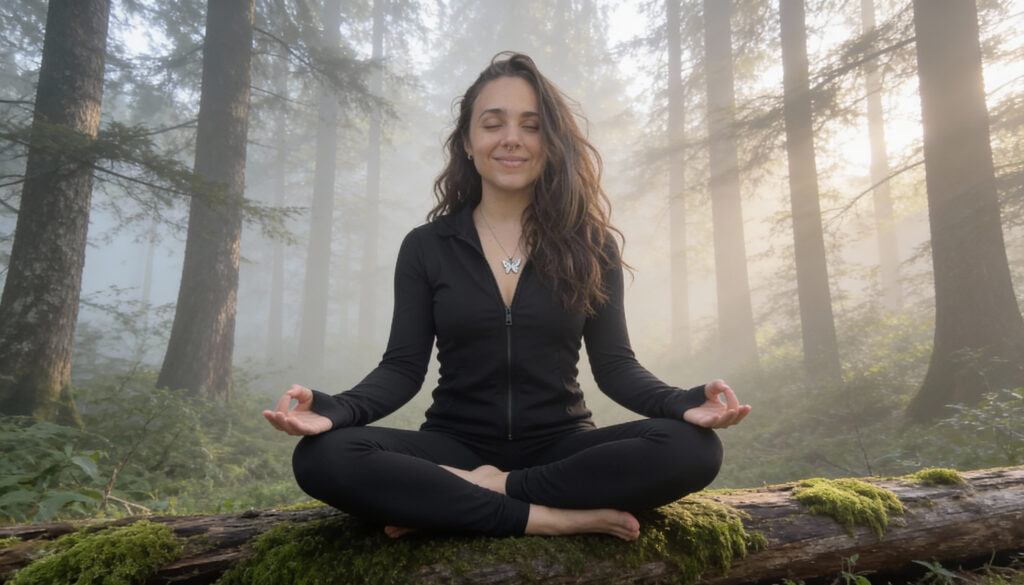
As I explored it more deeply, I started to understand that meditation wasn’t just about calming the mind — it played a powerful role in manifestation. I began listening to and applying the teachings of many different teachers, but the work that truly transformed my life came from Dr. Joe Dispenza.
His teachings helped me see the connection between the nervous system, belief, identity, and the reality we experience.
When I began meditating consistently, subtle shifts started to unfold. My inner world softened. My nervous system relaxed in ways it never had before. Long-held patterns rooted in anxiety, scarcity, and survival slowly began to loosen their grip.
And I want to be honest here — I’m still working through those survival emotions every day. I don’t have it all figured out, and I don’t want to pretend that I do. I’m very much a work in progress.
What has changed, though, is the quality of my inner state. My life feels calmer, more grounded, more poised. Meditation helped me get to the root of why manifestation can feel so difficult — not because of effort or technique, but because of state. The feelings we live in. The beliefs we carry. The safety (or lack of it) in our nervous system.
As I learned to regulate my inner world, manifestation became more natural. Not forced. Not frantic. Simply aligned.
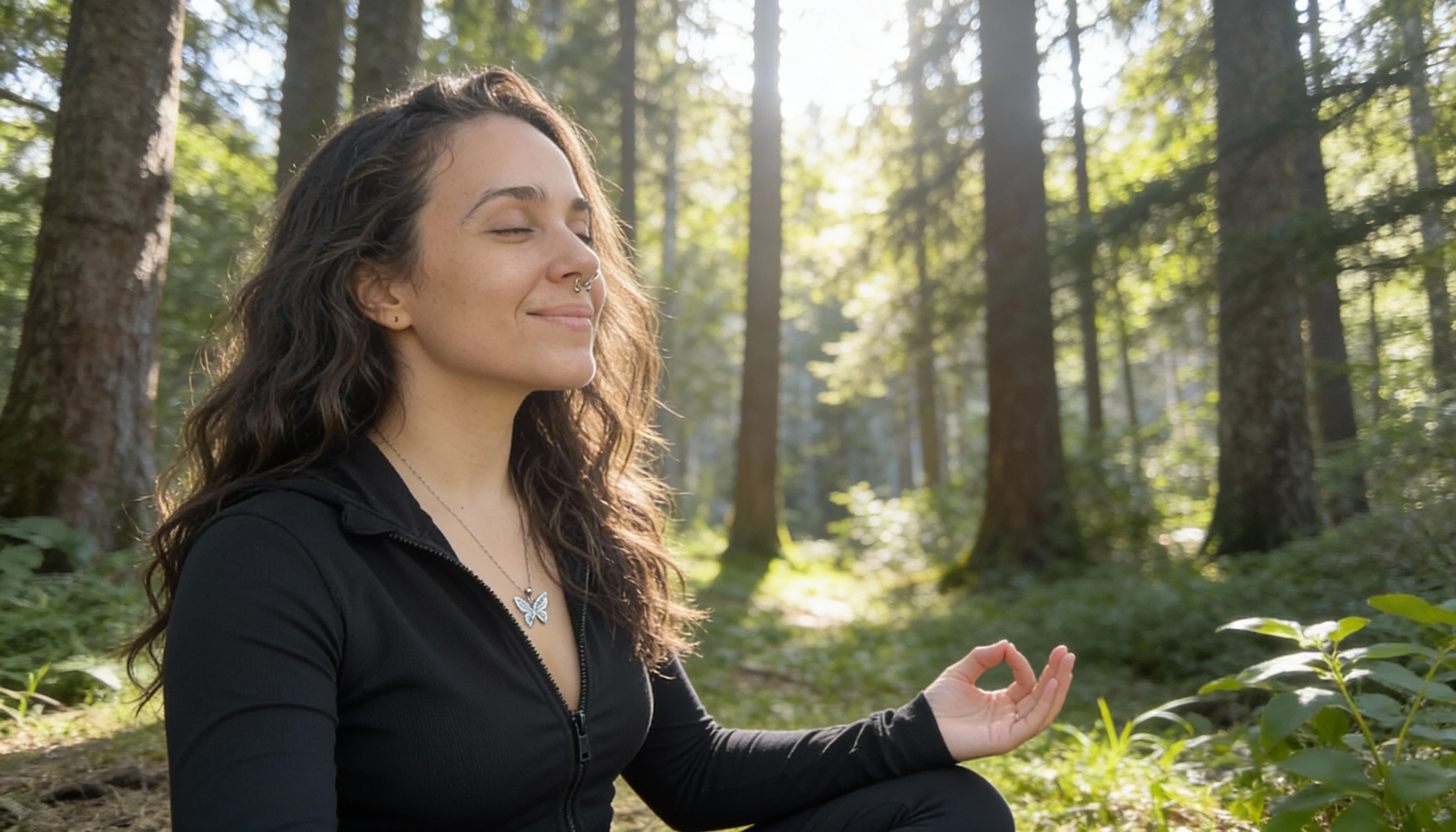
And without trying to control or chase anything, my external life began to mirror those internal shifts.
That’s when something truly clicked for me. The transformation didn’t happen because I was trying to manifest harder. It happened because my body finally felt safe enough to change. When safety replaced survival, alignment followed — and manifestation became a natural byproduct of that inner stability.
If you’d like to read more about what that chapter of my life taught me and how it shaped my spiritual journey, you can find my full story here:
What Being Homeless Taught Me & How It Deepened My Spiritual Journey
Tip 1: Calm the nervous system first
Why This Matters
Manifestation begins with safety, not effort. Your body is constantly communicating with your subconscious.

When your nervous system is dysregulated, it sends signals of urgency, lack, or threat — even if your mind is visualizing abundance. In that state, the underlying message is often “something is wrong” or “I don’t have this yet.”
The subconscious listens to the body first. When your body feels safe, it stops bracing for disappointment and scanning for danger. That shift alone changes what you’re creating from. A calm nervous system no longer broadcasts lack — it communicates steadiness and openness, which is the foundation of alignment.
How to Do It
Before setting intentions, visualizing, or affirming, start here:
- Sit comfortably, without forcing posture
- Inhale slowly through your nose
- Exhale a little longer than you inhale
- Drop your shoulders
- Unclench your jaw
Stay here for 2–5 minutes.
No goals. No manifestation yet. Just regulation.
This isn’t the moment to create — it’s the moment to settle. When your nervous system feels safe, everything that follows becomes easier and more effective.
Tip 2: Focus on Feeling, Not Forcing
Why This Matters
Your subconscious doesn’t respond to effort — it responds to emotion and internal state.

When you try to force belief or excitement, you often stay in wanting mode. Wanting carries tension and separation — a subtle message that what you desire isn’t here yet. Feeling, on the other hand, is embodiment. It signals presence rather than pursuit.
Meditation helps because it slows the mind enough for the body to speak. Instead of generating emotion, you allow it to surface. This shift from effort to awareness is where alignment begins.
How to Do It
Once your body feels calmer, gently bring your desire into awareness. There’s no need to visualize details or convince yourself of anything. Simply begin with curiosity.
Ask yourself, slowly:
- What would this feel like if it were already true?
- How would my body feel waking up each morning if this were my reality?
- What would feel different in my chest, stomach, or breath?
- What kind of inner relief would be present?
- How would I move through my day if this were settled and secure?
Pause after each question. Let the answers come as sensations, not thoughts.
Some of the emotional ques to look for:
- relief
- ease
- peace
- joy
- love
- happiness
- steadiness
- quiet confidence
- openness
Meditation creates the space for these sensations to emerge naturally. When the mind softens, the body responds without pressure.
If nothing arises right away, that’s okay. You can also ask:
- What part of me feels most relaxed when I imagine this?
- What feels lighter, even slightly?
Even a faint sense of calm or openness is enough. Alignment doesn’t require intensity — it requires presence.
The goal isn’t to make yourself feel something. It’s to notice what becomes available when resistance quiets.
Tip 3: Enter the receiving state
Why This Matters
Manifestation doesn’t respond to tension — it responds to openness.
Wanting often carries contraction. It can feel tight, urgent, or effortful, even when the desire itself is positive. That subtle tension communicates reaching rather than allowing. Receiving, on the other hand, feels spacious, grounded, and relaxed. It signals safety and readiness.

Meditation helps shift you into this state by slowing the nervous system and quieting mental grasping. Instead of chasing what you want, you begin to create space for it to arrive.
How to Do It
During meditation, gently guide your body into openness:
- Relax your belly and allow it to soften
- Let your breath slow and move naturally
- Imagine opening instead of reaching — creating space rather than grasping
As you settle, begin to ask yourself these gentle questions:
- What would it feel like to let this come to me?
- Where in my body can I soften a little more right now?
- What part of me is still reaching — and can it relax?
- How would my body feel if this were already allowed?
- What does “receiving” feel like in my chest, breath, or posture?
Pause after each question. Let the answers come as sensations, not thoughts.
If you notice tension, urgency, or effort creeping back in, simply return to the breath. No correction is needed.
Receiving energy feels gentle, quiet, and unforced. There’s nothing to make happen here. The more you allow your body to soften and open, the more naturally alignment begins to unfold.
Here is a great guided meditation to support you in entering the reciecing state:
Tip 4: Visualize with Feeling — Then Release
Why This Matters
Visualization works because the subconscious mind responds to imagery paired with emotion.
Clear mental images give the mind something concrete to respond to, while emotion is what signals meaning. When an image is infused with feeling, the subconscious begins to interpret it as real, not imagined. This is how new internal states are created.

Meditation helps because it quiets mental noise and allows imagery and emotion to merge without distraction. In this calm, focused state, visualization becomes embodied rather than intellectual — felt rather than thought.
Detachment comes afterward, not to weaken the process, but to allow the nervous system to relax once the signal has been sent. Your role is to impress the subconscious, not to supervise the outcome.
How to Do It
During meditation, once your body feels calm and open:
Visualize clearly.
Bring a clear, vivid image of your desire into your mind. Let it feel real and present — not forced, not rushed. Allow yourself to fully step into the scene and experience it as if it’s happening now.
Attach emotion to the image.
Instead of focusing only on what you see, anchor into what you feel. Ask yourself:
- What emotion is alive in this moment?
- What feels fulfilled, resolved, or complete?
- How does my body feel as I experience this clearly?
- What part of me is relaxing as I imagine this?
Let the emotion rise naturally and move through your body. The feeling is the signal — the image simply gives it direction.
If you’d like extra guidance with this step, you may find it helpful to use a guided meditation that walks you through visualization and emotional embodiment. This video can support you in creating clear inner imagery while connecting deeply to the feelings of your desired state:
You can use it as a complement to your own practice — either before meditating on your own or when you want gentle structure and guidance.
Once the emotion feels present — even briefly — gently release the image.
Sit in silence and mentally say:
“I trust the timing.”
Then return to your breath.
Tip 5: Use meditation to rewire belief
Why This Matters
Manifestation follows belief, not desire.
You can want something deeply and still struggle to manifest it if your beliefs don’t support it. Beliefs don’t change through repetition alone — they change when the nervous system is calm enough to receive new information. When the body feels safe and relaxed, the subconscious becomes open instead of defensive.

Meditation creates this receptive state. Rather than trying to force new beliefs, you allow them to land gently. This is why fewer affirmations, spoken slowly and with presence, are often far more powerful than repeating dozens of statements on autopilot.
How to Do It
During meditation, once your body is relaxed and your mind has quieted:
Gently introduce one supportive affirmation.
Choose words that feel steady and believable — not exaggerated or forced.
Repeat the affirmation slowly, once or twice.
Let each word land naturally. Pay attention to the rhythm and tone rather than trying to persuade yourself.
Then return to stillness.
Remain quiet and present, allowing the words to settle into the calm space you’ve created.
Affirmations You Can Use
Choose one that resonates and feels supportive in your body:
- I am safe to receive what is meant for me.
- My body is learning that it is safe to relax and trust.
- I allow new beliefs to form gently and naturally.
- It is safe for good things to unfold in my life.
- I don’t need to force — alignment is happening within me.
- I trust myself to integrate change at my own pace.
- What I desire feels safe and available to me.
Let the affirmation feel like an invitation, not a demand.
Tip 6: Let doubts surface without reacting
Why This Matters
Doubt doesn’t block manifestation — resistance to doubt does.

When you fight doubt, try to suppress it, or replace it immediately with positive thinking, you often give it more attention and energy. The nervous system reads that as something that needs to be handled or fixed, which reinforces tension.
Observation changes the relationship.
When a doubt is simply noticed without reaction, it loses its charge. It becomes a passing thought instead of a belief. Meditation trains this skill naturally by teaching you to witness thoughts without attaching to them.
How to Do It
During meditation, when a doubt arises:
- Notice it — acknowledge that it’s present without judgment
- Mentally say: “I notice this thought.”
- Return to your breath — feel the inhale and exhale grounding you back into the body
There’s nothing to argue with, correct, or fix. You don’t need to replace the thought or make it go away.
Just awareness.
Over time, this practice teaches your nervous system that doubt is not a threat — and when doubt isn’t treated as a threat, it naturally dissolves.
Tip 7: Take Massive Aligned Action
Why This Matters
Aligned action is not driven by anxiety — it flows from state.

This is why meditation and embodiment come first. Once you’ve regulated your nervous system, connected to feeling, embodied the future self, and released resistance, action stops feeling forced. It becomes obvious. Clean. Calm. From this place, action is no longer about making something happen — it’s about moving in harmony with what’s already unfolding.
As David Gikandi writes in A Happy Pocket Full of Money:
“You do not create what you want. You create what you are.”
When you are the version of yourself who feels safe, grounded, and aligned, action naturally follows that identity. This is why action is the final step, not the first.
How to Do It
After meditating and embodying the desired state, notice what wants to move through you.
Aligned action will often feel:
- calm
- obvious
- steady
It may still stretch you — but it won’t feel frantic or pressured.
After meditating and settling into your feeling state, gently ask yourself:
- What is the most aligned action available to me right now — even if it’s small?
- If I trusted that this is unfolding, what would I do next?
- What step feels supportive rather than draining?
- What action feels like cooperation with life, not control?
If an action feels rushed, urgent, or fear-driven, pause. That’s not alignment asking you to move — it’s anxiety trying to regain control.
When action arises from alignment, it feels grounded and purposeful. You’re not pushing the river. You’re stepping into its flow.
This is where manifestation becomes lived experience — not visualization, not intention, but embodied movement from a regulated state.
Closing
Aligned action is where everything you’ve practiced comes together.
When you calm your nervous system, feel instead of force, embody safety, release resistance, and move from clarity, manifestation stops being something you chase — it becomes something you participate in. Meditation isn’t just a tool you use in quiet moments. It becomes the inner state you carry with you as you live, choose, and act.
If this guide supported you in any way — even subtly — I would truly love to know.
Did something here help you understand manifestation differently?
Did a particular tip help you feel calmer, clearer, or more grounded?
Have you noticed small shifts in how you think, feel, or take action since beginning this work?
I invite you to share your experience in the comments. Your reflection matters more than you might realize. When you share honestly, you give someone else permission to soften, to trust themselves, and to keep going.
This journey isn’t about perfection or having it all figured out. It’s about learning to meet yourself with patience, safety, and compassion — and allowing alignment to build one calm moment at a time.
Thank you for being here, for doing this inner work, and for choosing a gentler path forward.
With love,
Deeana — Meditate4Calm

Affiliate Disclosure: Some links in this guide may be affiliate links, which means I may earn a small commission at no extra cost to you. I only share resources I genuinely trust and use myself. Your support helps me continue creating free content here at Meditate4Calm — thank you for being here 💛

