
Meditation has been one of the most powerful tools in my own healing journey, and over the years I’ve learned something beautiful: when you pair meditation with affirmations, you create a deeply receptive space where your mind and body can transform on a much deeper level. Many people use affirmations on their own throughout the day, but when they’re woven into meditation, they reach the subconscious mind in a way that feels softer, safer, and more meaningful.
If you’ve already read my article on How Affirmations Improve Meditation, you know that meditation opens the door for these positive statements to take root. In this article, we’ll go deeper into how to incorporate affirmations into your meditation practice so they genuinely support your emotional well-being, nervous system, and internal dialogue.
Why Affirmations Work Best When the Mind Is Calm

Meditation places your brain into a slower, quieter state—one where inner noise fades and the nervous system begins to settle. When researchers studied how self-affirmation affects the brain, they found something fascinating: repeating affirming statements activates areas associated with self-processing and reward, specifically the ventromedial prefrontal cortex. This was demonstrated in a study published in Social Cognitive and Affective Neuroscience, which showed that people practicing affirmations literally engaged parts of the brain that help them integrate new ideas about themselves.
This is part of why a calm mind receives affirmations so well. When you meditate, your brain naturally shifts toward more relaxed alpha and theta waves—states associated with openness, introspection, and deeper learning. With the nervous system soothed, the subconscious becomes far more receptive, and the affirmations you choose don’t just sound nice… they start to feel real.
I talk more about this connection between a relaxed mind and receptive affirmations in my article on 10 Powerful Affirmations to Enhance Your Meditation Practice, where I share how intention-filled statements can guide the direction of your emotional energy. When meditation and affirmations meet, transformation becomes more accessible.
Use Affirmations That Create Safety—Not Pressure

One of the biggest mistakes people make is using affirmations that feel too big or too demanding. When you’re dealing with anxiety, fear, or nervous system dysregulation, bold affirmations like “I am fearless” often contradict how you truly feel. And your body knows. Your subconscious knows. Instead of helping, these statements can trigger inner resistance.
A more effective way is to begin with language that creates grounding and safety. For example:
- “I am safe in this moment.”
- “I am supported right now.”
- “I am allowed to slow down.”
These kinds of affirmations regulate the body rather than overwhelm it. A 2020 discussion in Psychology Today highlighted this exact concept, noting that affirmations only create positive neuroplastic changes when they feel believable to the person saying them. If the brain perceives a statement as unrealistic, it can actually spark more anxiety instead of reducing it.
By choosing affirmations that feel emotionally true enough, you sidestep the pressure and invite genuine calm into your practice. Your nervous system responds to safety first; confidence grows afterward.
Pair Your Affirmations With Slow, Intentional Breathing
Breathing is one of the simplest yet most powerful ways to anchor an affirmation into your entire being. When you combine breath with affirmation, you create a physical-emotional connection—something your mind can return to over and over again.

Imagine this sequence:
Inhale: “I am supported.”
Exhale: “I release this tension.”
When you repeat this during meditation, your body begins to associate the affirmation with the physical experience of softening, calming, and letting go. Long, slow exhales activate the parasympathetic nervous system, which tells the body, You’re safe. As the study above noted, the brain becomes more receptive during these calmer states, allowing the affirmation to settle deeper.
Breath is a bridge. It carries the message from your conscious mind to your body and then down into your subconscious.
Repetition: The Foundation of Neuroplastic Change

Affirmations create inner shifts through neuroplasticity—the brain’s ability to reorganize and form new pathways. The more consistently you repeat a thought, the more familiar it becomes to your brain. Over time, these repeated statements form new habit loops that feel natural rather than forced.
This is why using affirmations during meditation is so powerful. Meditation strengthens your ability to focus, reduces mental clutter, and increases your capacity to stay present with each repetition. The neuroimaging study I mentioned earlier also found that self-affirmation activates brain regions associated with processing self-related information. When your brain hears something about you, it pays close attention.
That means if you sit every day for even a few minutes and gently repeat:
- “I am becoming calmer.”
- “I am learning to feel safe in my body.”
- “I am choosing peace in this moment.”
your brain begins to encode these as familiar truths. Over time, they shift from “something I’m trying to believe” to “something I naturally feel.”
This idea of building small, repeated moments of calm is also something I explored in my article How Affirmations Improve Meditation, because repetition and intention are the backbone of rewiring old subconscious patterns.
Feel the Emotion Behind the Words
Affirmations are most effective when you allow yourself to feel even a small hint of the emotion you’re trying to cultivate. You don’t need to fully embody the feeling immediately; even 1% is enough for your body to say, “This is possible.”
For example, saying “I am safe” while noticing a softening in your exhale or a slight release in your shoulders can create a profound shift. A study analyzed through therapeutic frameworks pointed out that affirmations work best when they are paired with an emotional experience—even something subtle—because emotion helps encode memory and learning.
Emotion is the glue that helps new beliefs stick.
If you don’t feel anything at first, that’s completely normal. Many people think they’re “doing it wrong” if they don’t instantly feel peace or confidence when repeating an affirmation. But emotional change often starts as a whisper. A small release in your breath. A softening in your jaw. A tiny shift in perspective.
That tiny shift is enough.
Start or End Your Meditation With 2–3 Key Affirmations
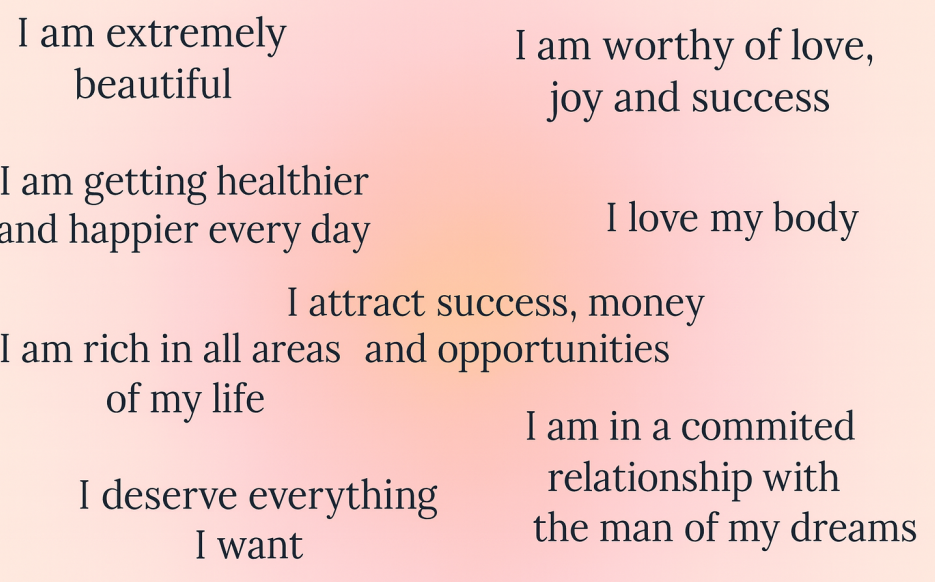
Some people try to use long lists of affirmations, hoping that more equals better. But your nervous system responds much more powerfully to a small number of emotionally aligned statements. You don’t need twenty affirmations—you need two or three that feel true, grounding, and supportive.
Using affirmations at the beginning of your meditation helps set your intention and guide your internal state. Using them at the end helps seal in the emotional tone you cultivated during your practice.
A simple structure looks like this:
- Sit and breathe for a minute.
- Repeat 1–2 affirmations slowly.
- Proceed with your meditation.
- End with the same affirmation or a new one that reflects how you feel.
When used as bookends, affirmations help shape the beginning and ending of your inner journey, allowing you to anchor your emotional shift more deeply.
Anchor Your Affirmations to Body Sensations
One of the most powerful ways to create lasting emotional patterns is to attach affirmations to physical sensations. The body remembers experiences long before the mind does. When you link an affirmation to a gesture or bodily shift, your nervous system begins associating the statement with safety.
Some examples:
- Placing a hand over the heart while saying “I am supported.”
- Relaxing your shoulders as you say “I am letting go.”
- Lengthening the exhale as you repeat “I release this tension.”
- Sitting tall and lifting your chin slightly as you say “I am becoming more confident.”
These anchors turn affirmations into felt truth, something the body can recall even outside of meditation. Over time, the affirmation becomes automatic, and the physical gesture becomes a cue for calm.
Use “I Am Becoming…” When “I Am…” Feels Too Strong
If bold statements make you uncomfortable or trigger inner pushback, soften the language. This doesn’t weaken the affirmation; it actually strengthens it by reducing resistance.
Instead of:
- “I am confident,”
try: - “I am becoming more confident each day.”
Instead of:
- “I am peaceful,”
try: - “I am learning to feel peace in my body.”
This “bridge language” is incredibly effective for healing anxiety and trauma because it meets you where you are rather than forcing you into a state you don’t yet feel ready to claim.
I often used this approach in my early days of healing. Saying “I am worthy” felt unreachable, but “I am becoming worthy” felt like a gentle doorway I could step through. Over time, that doorway widened, and the affirmation eventually became a truth I could hold without hesitation.
Frequently Asked Questions

1. What if affirmations feel fake?
This is extremely common. Studies show that affirmations can backfire if they contradict deeply held beliefs. Try using softer, progressive statements like “I am becoming…” or “I am open to…”
2. Should I use affirmations during my entire meditation session?
You don’t have to. Many people find it helpful to use them at the start and end, allowing the middle portion of meditation to be quiet and observational.
3. Is there a best time of day to do this?
The best time is the time you’ll actually stick to. Some prefer mornings, others find evenings more calming. Consistency matters far more than timing.
4. Do affirmations replace therapy?
No. They can support emotional well-being, but they don’t replace therapy, medication, or individualized mental health support when needed.
5. What if I don’t feel anything at all?
Feeling nothing does not mean it isn’t working. Many people begin with emotional numbness, especially after prolonged stress or anxiety. Keep practicing—your emotional response will grow with time.
Final Invitation
I would love to hear your personal experiences with affirmations and meditation. Which statements resonate with you? What emotions come up? What progress have you noticed? Share your story in the comments so we can grow together as a community.
With love,
Deeana — Meditate4Calm

Disclaimer: This article is for educational and self-development purposes and is not a substitute for medical or psychological treatment. If you are experiencing significant anxiety or trauma symptoms, please consult with a licensed professional.