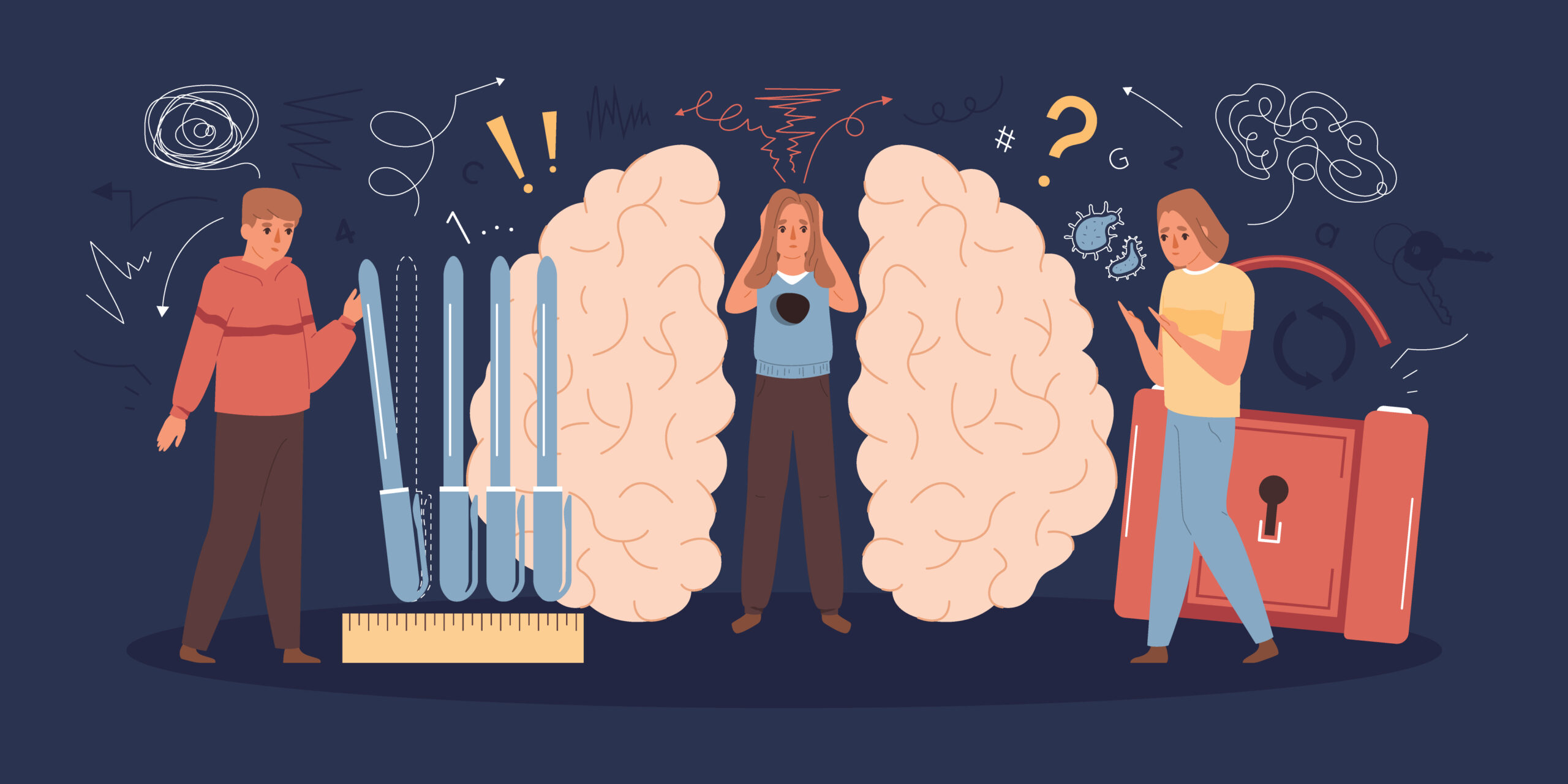
Stress has become so normalized in modern life that many people no longer recognize it as something the body moves through. Instead, it feels like something we are.
“I’m just a stressed person.”
“I’ve always been anxious.”
“My nervous system is broken.”
For many, stress doesn’t arrive in dramatic moments. It hums quietly in the background of everyday life — in the jaw that won’t unclench, the shallow breathing, the tight chest before opening an email, the racing thoughts at night when the body is finally still but the mind won’t slow.

And because this state becomes familiar, it starts to feel permanent.
But here is something worth saying:
Stress is not your identity.
Stress is not a personal failure.
Stress is a nervous-system response.
Mindfulness meditation for stress reduction is not about fixing yourself, overriding your emotions, or becoming calm at all costs. It is about helping the body feel safe enough to come out of survival mode — again and again — until calm becomes possible without force.
Mindfulness is not presented as a productivity tool or a performance practice. It is offered as a relationship with the present moment — one that restores trust in the body, softens chronic tension, and creates space between who you are and what you experience.
This article is a exploration of:
- What mindfulness meditation truly is
- Why it works for stress at a biological level
- How stress actually functions in the nervous system
- And how to practice mindfulness in a way that is gentle, realistic, and sustainable
If you’ve tried meditation before and felt like you were “doing it wrong,” this article is for you.
If you feel overwhelmed by stress and don’t know where to begin, this article is for you.
If you’re already experienced with meditation and want to understand why it works, this article is for you.
Medical Disclaimer: Meditate4Calm offers mindfulness and meditation content for educational purposes only and does not provide medical advice. These practices are intended to support wellbeing, not replace professional care. Please consult a qualified healthcare provider for personalized medical or mental health guidance.
Understanding the Fundamentals: What Is Mindfulness Meditation?
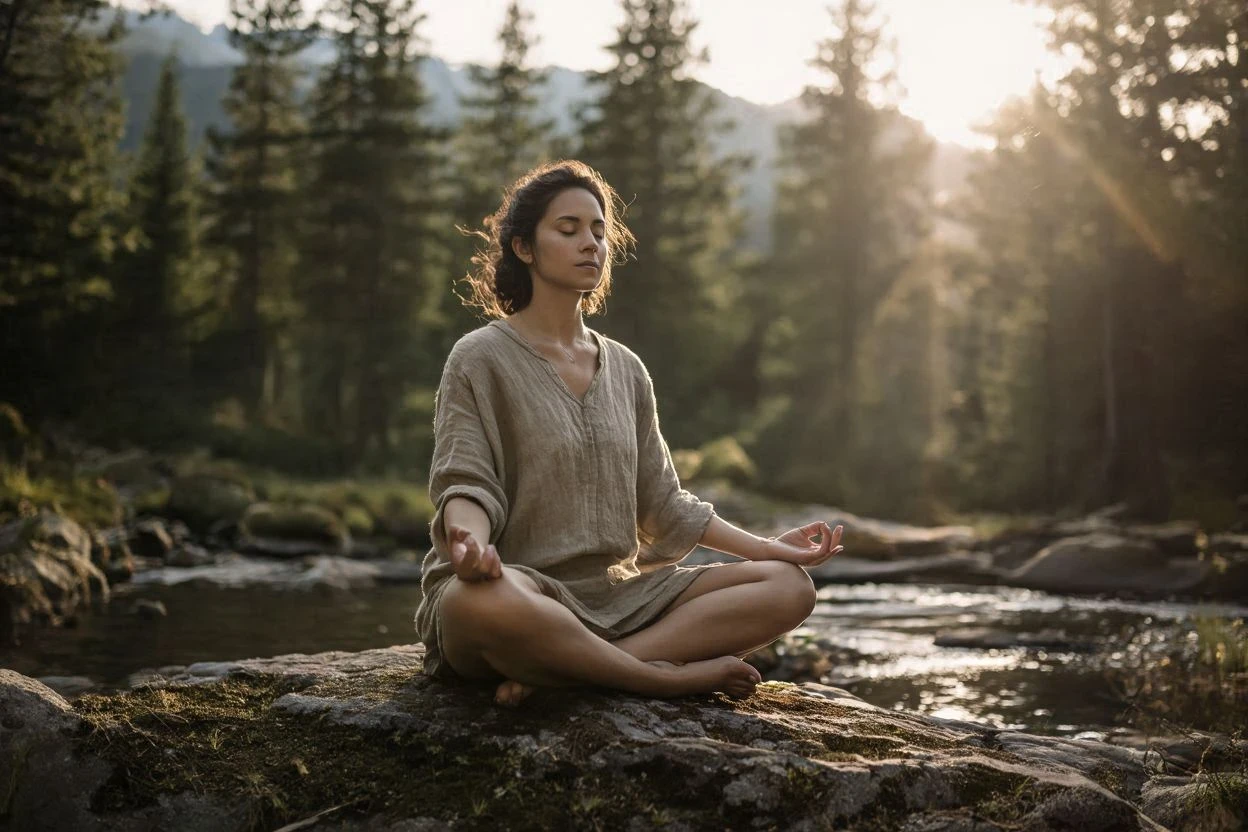
Mindfulness meditation is often described in simple terms, yet its effects are anything but simple.
At its core, mindfulness meditation is the practice of bringing attention to present-moment experience with openness, curiosity, and without judgment.
That present-moment experience might include:
- The sensation of breathing
- Physical sensations in the body
- Sounds in the environment
- Emotional tone
- Thoughts passing through the mind
What makes mindfulness different from many other mental practices is that nothing needs to change for the practice to be successful.
You do not meditate to:
- Eliminate stress
- Stop thinking
- Force relaxation
- Become a better version of yourself
You meditate to be with what is already happening — safely.
This is a crucial distinction, especially for stress reduction.
Stress thrives on resistance. When the body senses that its internal experience is being judged, suppressed, or forced away, the nervous system often becomes more activated, not less.
Mindfulness gently shifts the relationship from:
“This shouldn’t be happening”
to
“This is happening, and I can stay with it.”
That shift alone begins to change how the nervous system responds.
Mindfulness is not passive. It is attentive presence with consent.
If you enjoy pairing meditation with reflection and meaning, journaling can be a powerful complement. You might enjoy: 10 Journal Prompts to Inspire Your Daily Meditation
The Science of Stress: Why We Need Mindfulness More Than Ever
Stress is not just a mental state. It is a whole-body physiological process designed to keep us alive.

When the nervous system perceives threat — whether real or imagined — it activates the sympathetic stress response:
- Heart rate increases
- Breathing becomes shallow
- Muscles tense
- Cortisol and adrenaline are released
- Digestion, immunity, and long-term repair are deprioritized
This response is adaptive in short bursts. The problem arises when stress becomes chronic — when the nervous system never fully returns to baseline.
Modern stressors are rarely physical threats. They are psychological, emotional, and anticipatory:
- Financial uncertainty
- Relationship tension
- Work pressure
- Past trauma stored in the body
- Fear of future outcomes
The nervous system does not distinguish between a lion in the room and an email that feels threatening. Both activate the same circuitry.
According to the American Psychological Association, chronic stress is associated with anxiety disorders, depression, cardiovascular disease, immune dysfunction, digestive issues, and burnout.
Mindfulness meditation works because it interrupts the stress response at the level of the nervous system, not just the thinking mind.
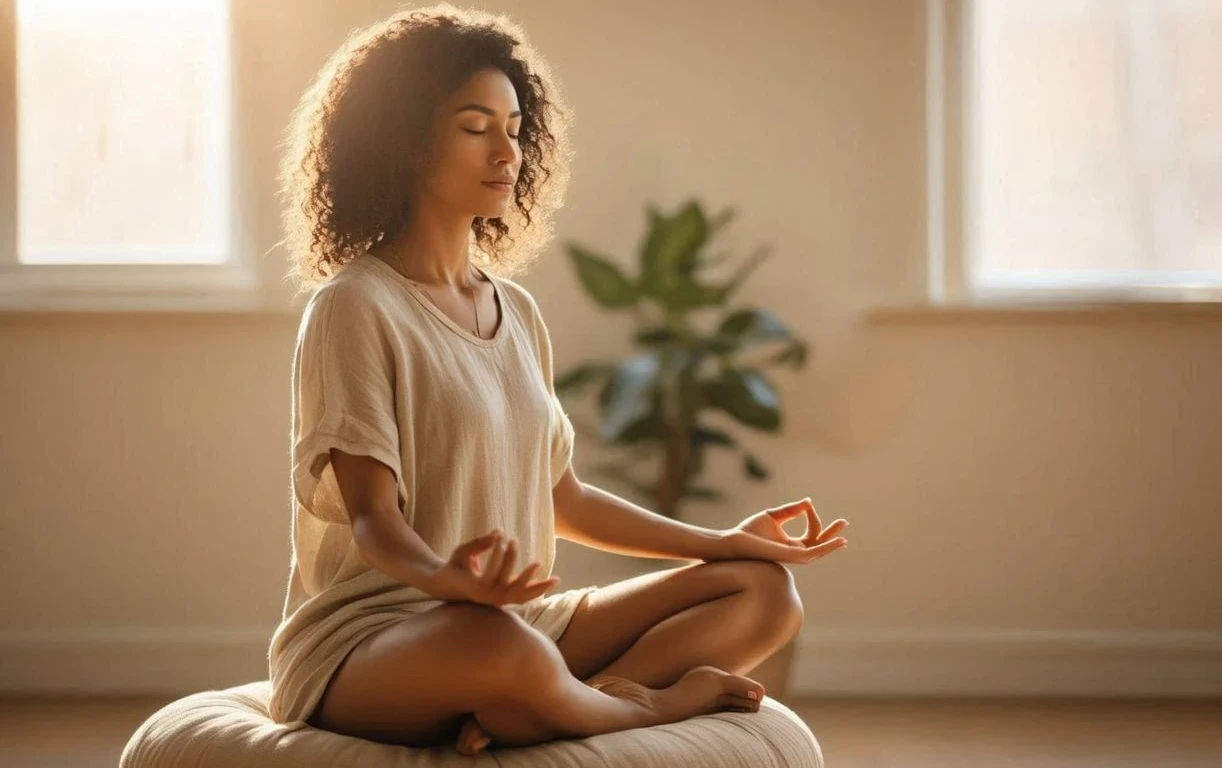
A widely cited meta-analysis published in JAMA Internal Medicine found that mindfulness meditation programs significantly reduced anxiety, depression, and psychological stress across diverse populations.
This is not because mindfulness makes life easier — but because it changes how the body experiences life.
1. Stress Is a Nervous-System Response — Not a Personal Failure
One of the most relieving realizations mindfulness offers is this:
Your stress response is not a flaw.
It is an adaptation.
If your nervous system activates quickly, it likely learned to do so for good reasons:
- Growing up in unpredictable environments
- Experiencing emotional, physical, or relational trauma
- Being rewarded for hyper-vigilance or over-responsibility
- Long periods of instability or pressure
Your body learned how to survive.
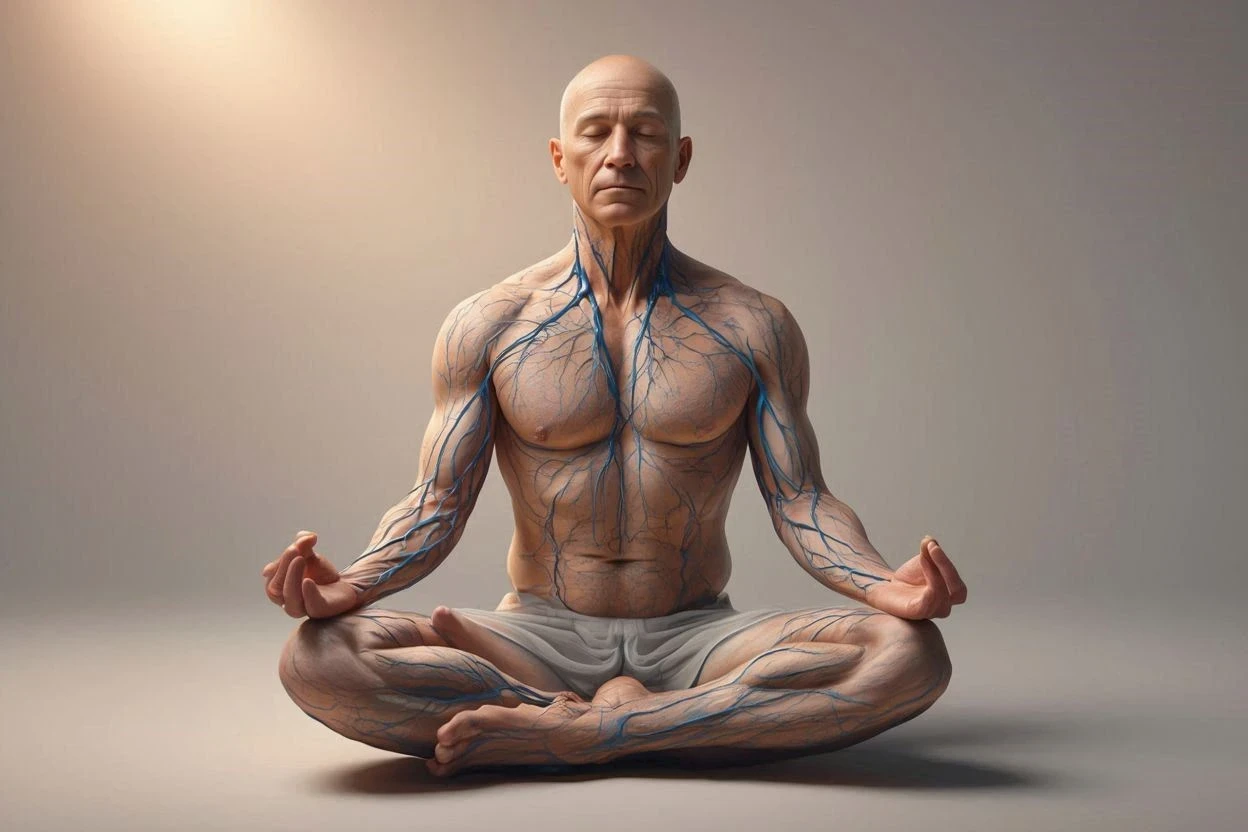
Mindfulness begins by honoring this intelligence instead of trying to override it.
Instead of asking:
“What’s wrong with me?”
Mindfulness gently asks:
“What does my nervous system need right now to feel safer?”
This reframing alone reduces shame — and shame itself is a powerful stressor.
Key insight:
Stress decreases when the body feels safe in the present moment — not when the mind is convinced everything is okay.
2. Awareness Interrupts the Stress Loop
Stress becomes chronic when it runs automatically.
A trigger appears → the mind reacts → the body tightens → the interpretation reinforces danger → the loop continues.
Mindfulness introduces awareness into this cycle.

When you notice:
- Tightness in the chest
- A clenched jaw
- Shallow breathing
- Rapid thoughts
You are no longer completely inside the loop — you are observing it.
This moment of awareness creates choice.
Mindfulness anchors attention in something tangible:
- The sensation of breath moving in the body
- The feeling of feet on the ground
- Sounds in the environment
These anchors orient the nervous system to now, rather than to imagined futures or remembered pasts.
Over time, this practice builds response flexibility — the ability to pause before reacting.
3. You Don’t Need to Relax to Reduce Stress
One of the most common misconceptions about meditation is that relaxation is the goal.
For many people, trying to relax actually creates more tension.
The nervous system interprets:
“I need to calm down”
as
“There is something wrong.”
Mindfulness takes a radically different approach.
It offers permission instead of pressure.
You don’t need to relax.
You don’t need to feel peaceful.
You don’t need to change your experience.
You only need to notice it — gently.
When stress is allowed to exist without resistance, it often softens naturally.
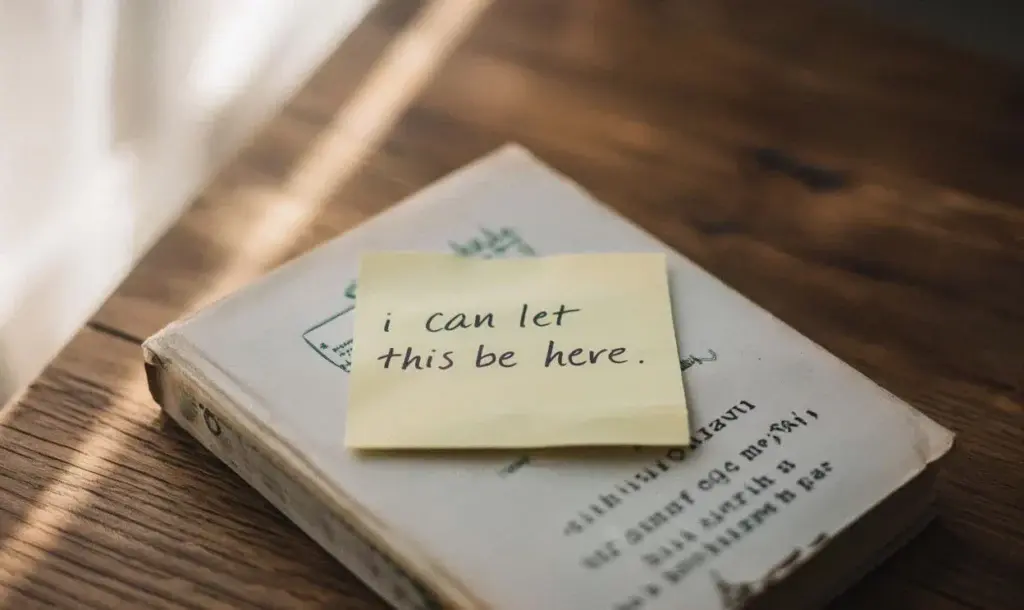
Mantra:
“I can let this be here.”
This is not giving up. It is nervous-system honesty.
4. The Body Is the Fastest Entry Point
When stress is high, the thinking mind is often unreliable.
The body, however, responds quickly to sensory input.
This is why mindfulness meditation emphasizes embodied awareness.
Instead of analyzing emotions, you might notice:
- Pressure where your body meets the chair
- Temperature of the air on your skin
- Subtle movement of the breath
These sensations are neutral and grounding.
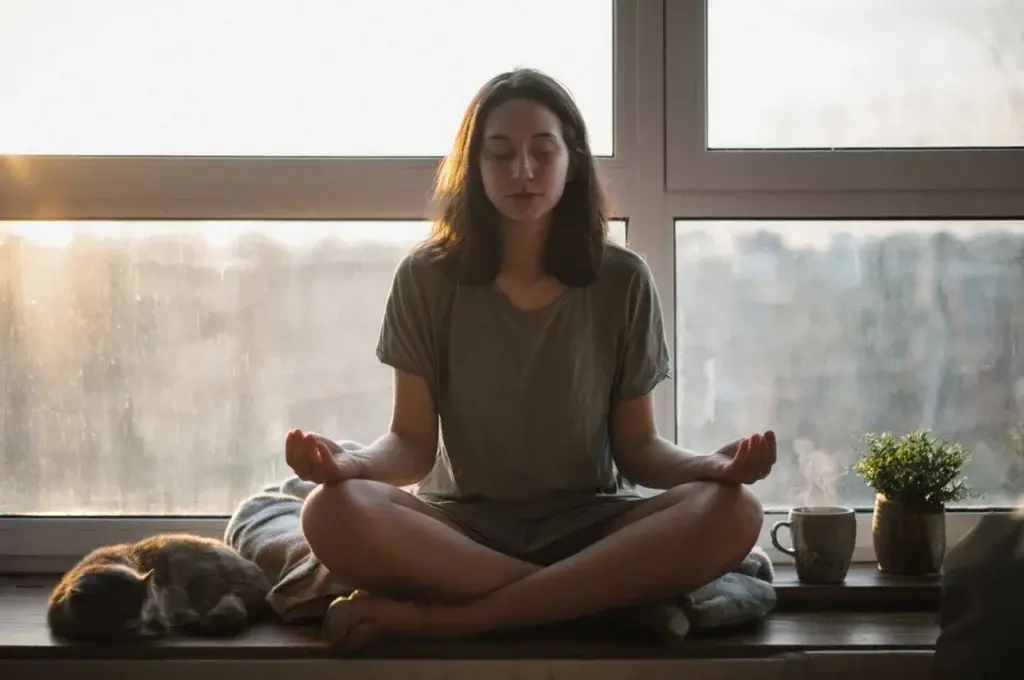
A study published in Frontiers in Human Neuroscience found that body-based mindfulness practices directly influence autonomic nervous system regulation and emotional resilience.
You do not need to understand your stress to calm it.
You need to feel the present moment safely.
5. Consistency Matters More Than Duration
Many people believe meditation must be long to be effective.
In reality, the nervous system learns through repetition and predictability, not intensity.
Short, daily practices are more effective for stress reduction than occasional long sessions.
Optimal practice:
- 5–15 minutes
- Once or twice daily

Consistency teaches the nervous system:
“There is a place I return to where nothing is demanded of me.”
This is how stress patterns gradually unwind.
If you’re curious how mindfulness can also support intention and future alignment, you may enjoy: How to Manifest Using Meditation
6. Thoughts Lose Power When Observed
Mindfulness does not aim to eliminate thoughts.
It teaches how to relate to them differently.

Instead of automatically believing every thought, you learn to observe them as mental events.
This creates what psychologists call cognitive defusion.
Instead of:
“This is urgent and dangerous”
You notice:
“I’m having a stressful thought.”
Dr. Daniel Siegel explains that naming experiences activates the prefrontal cortex, helping calm emotional reactivity. Harvard Health Publishing reports that mindfulness changes brain regions involved in stress regulation and emotional balance.
Thoughts lose power when they are witnessed rather than believed.
7. Stress Softens When You Stop Identifying With It
One of the deepest shifts mindfulness offers is identity separation.
Instead of:
“I am stressed”
You recognize:
“Stress is present.”

This subtle language shift creates space.
You are no longer consumed by stress — you are aware of it.
Key realization:
Stress is something you experience, not who you are.
This awareness reduces suffering even when external circumstances remain unchanged.
8. Safety Is the Real Goal
Mindfulness is not about productivity, positivity, or self-optimization.

Its deepest purpose is restoring internal safety.
When the body feels safe:
- Heart rate slows
- Muscles soften
- Digestion improves
- Mental clarity returns
Polyvagal theory, developed by Dr. Stephen Porges, emphasizes safety as the foundation of regulation and connection. Mindfulness teaches the body — slowly and patiently — that safety is possible in the present moment.
Quick Tips for Practicing Mindfulness During Stress
1. One Mindful Breath Counts

When stress is high, the nervous system is not looking for perfection — it’s looking for interruption.
You don’t need to sit down or close your eyes.
Try this:
- Inhale through your nose for a slow count of 3
- Exhale through your mouth for a slow count of 4
- Let the exhale be slightly longer than the inhale
That’s it.
Even a single breath with awareness can signal the nervous system to begin shifting out of survival mode.
If you have time, repeat once or twice — but don’t turn it into a performance.
2. Let Sensation Lead, Not Analysis
When stress is active, thinking harder rarely helps. The nervous system responds faster to physical sensation than to logic.
Instead of asking “Why am I feeling this way?”, gently shift to “What am I noticing in my body right now?”
Try this:
- Notice where your body makes contact with the floor or chair
- Feel the weight of your body being supported
- Sense the temperature of the air on your skin
No need to change anything. Just notice.
This grounds the nervous system in the present moment, where safety is often already present.
3. Open Your Eyes if You Feel Overwhelmed

Closing your eyes can feel unsafe for some people — especially during stress, anxiety, or trauma activation.
Mindfulness does not require closed eyes.
Try this:
- Gently open your eyes
- Let your gaze soften
- Name three neutral objects you can see
This orienting response helps the brain recognize that the environment is not threatening.
If you’re in public, this can be done discreetly and silently.
4. Anchor in Neutral Sensations
When emotions feel intense, anchoring to “pleasant” sensations can feel impossible.
That’s okay.
Neutral sensations are often more accessible and just as regulating.
Try anchoring to:
- The feeling of your feet inside your shoes
- The sensation of your hands resting on your legs
- The rhythm of your breath moving your chest or belly
Neutral does not mean numb — it means steady.
This gives the nervous system a place to rest without pressure.
5. Be Kind to Resistance (It’s Information, Not Failure)

If your mind resists mindfulness — that’s not a problem. It’s information.
Resistance often means:
- The nervous system doesn’t feel safe yet
- The practice feels unfamiliar
- You’re asking too much too quickly
Instead of pushing through, try meeting resistance with curiosity.
Try this:
- Silently name it: “Resistance is here.”
- Notice where you feel it in your body
- Offer yourself one compassionate phrase, such as:
“I don’t have to fix this right now.”
Kindness lowers stress faster than force ever will.
Frequently Asked Questions

How long before mindfulness reduces stress?
Many people notice subtle changes within 1–2 weeks of consistent practice. These changes often show up as less reactivity, greater awareness of stress, or faster emotional recovery rather than immediate calm. Mindfulness works gradually by retraining the nervous system over time, not by forcing relaxation.
Is it normal to feel more aware of stress at first?
Yes, this is very common and completely normal. Mindfulness doesn’t create stress—it reveals what was already present beneath the surface. Awareness always comes before regulation, and noticing stress is the first step toward softening it.
Can mindfulness help anxiety disorders?
Yes, mindfulness-based approaches such as Mindfulness-Based Stress Reduction (MBSR) are widely used in clinical settings. Research shows mindfulness can reduce anxiety by calming the nervous system and interrupting worry cycles. Many people find it especially helpful when practiced consistently or alongside professional support.
Is mindfulness safe for trauma survivors?
Yes, mindfulness can be safe and supportive when practiced gently and with choice. Trauma-sensitive mindfulness emphasizes short practices, external anchors, and the option to stop at any time. The goal is to build a sense of safety in the body rather than pushing through discomfort.
Closing Invitation

Mindfulness meditation is an invitation to come home to yourself.
To stay with your breath, your body, and your awareness — even in moments of intensity — without needing to change or escape.
If this resonates, I invite you to pause and reflect:
Where do you feel stress in your body?
What has meditation quietly taught you?
What does safety feel like when you allow yourself to slow down?
With love,
Deeana — Meditate4Calm

Medical Disclaimer: Meditate4Calm offers mindfulness and meditation content for educational purposes only and does not provide medical advice. These practices are intended to support wellbeing, not replace professional care. Please consult a qualified healthcare provider for personalized medical or mental health guidance.