A guide by Deeana — Meditate4Calm
If you’ve been with me for a while or you’ve stopped by my About Me page, you already know that meditation wasn’t something I grew up with. I didn’t come from a quiet, peaceful background. I came from trauma, anxiety, emotional dysregulation, and a version of myself who felt constantly overwhelmed. Meditation didn’t “fix” my life overnight, but it did become the tool that helped me calm my nervous system, rebuild trust with myself, step into confidence, and let go of the emotional patterns that used to run my life.
Because of that, I try to share meditation in the most honest and human way I can—not as a perfect guru on a mountaintop, but as someone who learned (and is still learning) that inner peace is built through small, consistent actions. One of the most important lessons I’ve learned along the way is how profoundly distractions shape our meditation experience. Sometimes we blame ourselves for not being able to focus when the truth is… our environment hasn’t been set up to support the mind.
So today, I want to walk you through what really makes meditation hard—and how to create a space where your mind can settle naturally.
Your Environment Shapes Your Mind
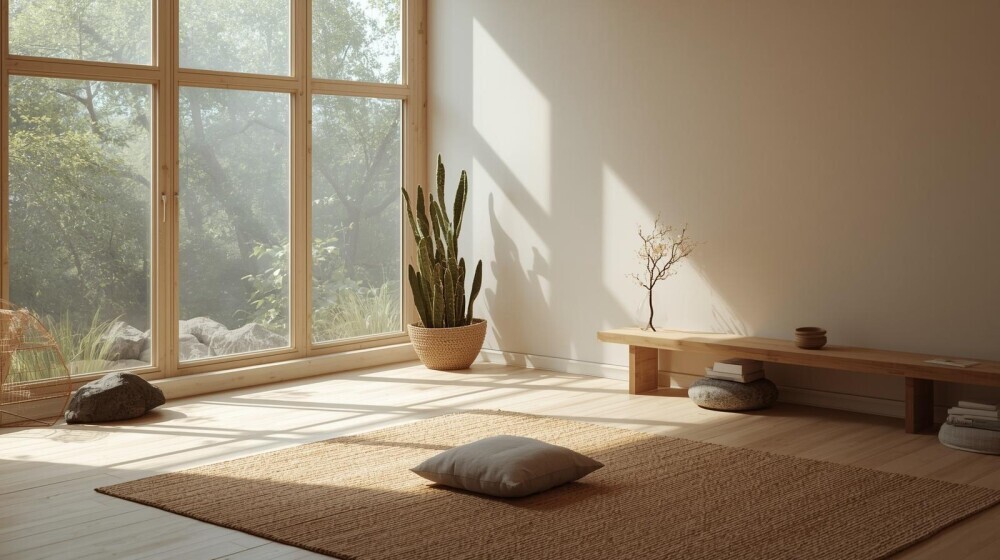
One of the first things I realized when I started meditating regularly was how much my surroundings influenced my ability to relax. When I tried to meditate in a cluttered or chaotic space, my mind behaved exactly like the environment around me: scattered, loud, and restless. It wasn’t that I was “bad” at meditating—it was that my nervous system was still in alert mode.
Environmental psychology actually supports this. Research indicates that visual and auditory chaos increases cognitive load, making it much harder to sustain attention in meditation. One study on meditation hindrances identified “environmental interruptions” as one of the most common barriers to staying focused.
Once I understood this, I stopped expecting myself to create inner calm in a space that didn’t support it. I created a small, dedicated corner in my room—not some elaborate Zen setup, just a tidy, peaceful space. I removed the unnecessary visual clutter, softened the lighting, and let that corner represent calm. My brain immediately started associating that spot with safety and ease.
You don’t need a big meditation room. Even a tiny corner sends a powerful message to the body:
“You are safe here. It’s okay to rest now.”
Your Phone Is the Biggest Meditation Block (Even When You Think It Isn’t)
I used to meditate with my phone beside me, face-down, on silent. I told myself, “I’m not going to look at it.” But the truth? My mind still knew it was there. The slightest buzz or even the possibility of a notification was enough to keep part of my attention “on standby.”
It wasn’t until I physically moved my phone to another room that I felt a sudden spaciousness in my mind. It’s wild how quickly the mind relaxes when it no longer expects to be interrupted.
This isn’t just a personal experience. Research shows that the mere presence of a phone—even when not being used—reduces cognitive capacity and attentional depth. We’re wired to respond to it.
So when I meditate now, I either put my phone away completely or switch it into airplane mode. That simple shift tells my brain:
“You’re unreachable for a moment. It’s okay to drop in.”
If you struggle to focus, this one change can be transformative.
Routine Calms the Mind Before You Even Sit
One of the most underrated ways to reduce distractions is simply creating routine. When you meditate at the same time or in the same spot each day, your brain begins to recognize the pattern. Without you even trying, the mind starts preparing itself: “Oh, this is the part where we settle.”
This is exactly why habits are so powerful. When something becomes a ritual, it takes less mental energy to begin.
You don’t need a rigid schedule. Just choose a window of time that feels natural, like right after waking up, before bed, or after lunch. I’ve noticed that the more consistent I am, the less fidgety and resistant my mind becomes. Routine removes the internal debate and clears the space for ease.
Noise Isn’t the Problem—Your Relationship to Noise Is

For a long time, I believed I needed perfect silence to meditate. I imagined that all “real meditators” found quiet rooms where nothing ever happened. But when I learned the truth, it changed everything:
You don’t need silence.
You need non-reactivity.
A dog barking doesn’t ruin your meditation. A car passing by doesn’t ruin it. A neighbor moving around doesn’t ruin it. What creates distraction is our reaction to the noise—the irritation, the judgment, the thought spiral.
A fascinating study on meditation hindrances found that external noise becomes significantly less disruptive when practitioners adopt a non-reactive, noticing-based approach.
Now, instead of fighting noise, I acknowledge it. I let the sound move through my awareness without labeling it as good or bad. If anything, noise becomes a tool—a reminder to come back to the present.
It’s empowering when you realize you don’t need perfect conditions to meditate.
You just need a gentler relationship with the world around you.
Your Body Needs to Feel Good Before Your Mind Can Rest
One of the reasons many people feel distracted during meditation is simply because their body isn’t comfortable. When the body is tense, the mind becomes hyper-aware of every sensation. This isn’t a lack of discipline—it’s biology.
A small shift changed everything for me: before I even sat down, I began taking a slow minute to breathe deeply, soften my shoulders, and gently stretch my body—nothing intense, just simple movements to release tension. Loosening my neck, rolling my shoulders, or opening my chest made my body feel supported instead of stiff. I stopped forcing myself into a “perfect” posture and let my body settle into a position that felt natural, grounded, and comfortable. Once my body felt open and at ease, my mind finally had permission to relax with it.
Once the body feels supported, the mind has permission to settle.
Setting a Clear Intention Makes a Huge Difference

Before I begin a meditation, I always take a quiet moment to set a simple intention. It doesn’t have to be poetic or profound. Sometimes it’s as gentle as, “For the next few minutes, I’m here to breathe,” or “I allow this moment to be exactly what it is.” Other times, it’s something more emotional, like “I’m giving myself permission to slow down,” or “I’m choosing peace over urgency right now.”
What I’ve learned is that intention acts like a doorway. The moment you set it, your mind shifts from the outside world into your inner world. It’s a soft invitation—never a demand—that helps guide your awareness without pressuring you to “get it right.”
Intention also gives you something to come back to when distractions inevitably show up. Instead of getting frustrated or feeling like you’ve “lost” your meditation, you gently reconnect with the purpose you set at the beginning. Even long-time meditators do this. In fact, many say the intention is what anchors the entire practice. It’s like holding a lantern in a dark room—it doesn’t eliminate all the shadows, but it helps you see your way through them.
And yes, your mind will wander. Sometimes it wanders a little, sometimes a lot. That’s not a sign of failure—it’s the nature of the mind. The beauty of intention is that it gives you a direction to return to, again and again, without judgment. Over time, this simple act of returning becomes one of the most powerful parts of meditation. It teaches you patience, consistency, and gentle self-awareness—skills that spill over into every part of your life, far beyond the meditation cushion.
Internal Distractions Are Part of the Practice—Not Proof of Failure
One of the biggest misconceptions about meditation is the idea that you’re supposed to “empty your mind.” That’s not what meditation is—and it’s definitely not what the science shows.
Studies reveal that internal distractions—thoughts, emotions, restlessness—are completely normal and extremely common. They don’t indicate that you’re bad at meditation.
They indicate that you’re human.
What truly matters isn’t whether distractions arise but how you respond when they do. When a thought shows up, you notice it. When an emotion arises, you feel it without being swallowed by it. When restlessness comes in, you acknowledge it and gently return.
Meditation isn’t about having a quiet mind.
It’s about learning to be less controlled by the noise—both inner and outer.
Internal distraction becomes part of the journey. Each time you come back, you’re strengthening your awareness like a muscle.
A Meditation Resource to Ground You
One thing I love about meditation is that you don’t have to figure it all out alone. Sometimes hearing a calm voice guide you through the experience makes the whole practice feel softer, more supportive, and far less like you’re “trying to do it right.” If you’re someone who struggles with distractions—noise, thoughts, emotions, or even the pressure to focus—this guided meditation by mindfulness coach Jeremy Lipkowitz is a beautiful resource:
Focusing on Distractions – Guided Meditation
What I appreciate most about Jeremy’s approach is how gently he teaches you to work with distractions rather than fight against them. He encourages a mindset of curiosity and acceptance, guiding you to notice sounds and thoughts without reacting—a perfect reflection of what we’ve explored in this article.
The meditation also does a wonderful job normalizing distractions, dissolving the idea that noise or busy thoughts mean you’re doing something wrong. Instead of pushing the world away, it helps you let the environment become part of the practice. His pacing is slow and grounding, creating a sense of spaciousness that’s especially comforting on days when the mind feels restless.
If you’ve ever felt discouraged because your mind wanders or life refuses to quiet down, this video is a gentle companion. It helps you settle back into yourself, reminding you that distraction isn’t a barrier—it’s simply part of being human.
Frequently Asked Questions
Do I need total silence to meditate?
Not at all. The real practice is learning not to react to the noise around you. Silence is helpful, but not necessary.
What if my phone distracts me even when I try not to look at it?
You’re not doing anything wrong—phones are designed to capture attention. Try putting it in another room or switching to airplane mode.
My mind is always racing. Does that mean meditation isn’t for me?
Racing thoughts are normal. Meditation isn’t about stopping them; it’s about creating space around them.
What if my body gets uncomfortable?
It’s okay to adjust your posture gently. Comfort supports a stable practice. You can also try mindful walking if sitting feels too difficult.
What I Hope You Carry Forward

Removing distractions isn’t about creating a perfect Zen bubble. It’s about making small, meaningful adjustments that allow your nervous system to shift from alertness into ease. It’s about creating a supportive environment, cultivating routine, working gently with noise, honoring your body’s comfort, and learning to recognize internal distractions as an essential part of the journey.
I know what it feels like to rebuild inner peace one breath at a time. If meditation feels hard, you’re not failing. You’re learning. And you’re doing the inner work many people avoid because they never slow down long enough to face themselves.
If you feel inspired, I’d love for you to share in the comments:
What distractions show up most for you during meditation?
Let’s talk about it. We grow together by sharing our experiences.
With love,
Deeana — Meditate4Calm

Disclaimer
Meditation can support mental wellness, anxiety regulation, and emotional balance, but it is not a replacement for therapy, medical treatment, or professional mental-health support. If you are dealing with severe anxiety, depression, or trauma symptoms, please seek guidance from a qualified professional. Meditation can be a helpful companion to healing, but it should not be the only approach.