What Happens When You Meditate for Years?
A few years ago, I was just hoping meditation would help me feel a little less anxious. I had no idea that every time I sat down to practice, I was literally reshaping my brain. Not in some abstract, metaphorical way, but in a physical, measurable, scientifically observable way.
As I’ve shared on my About Me page, I found meditation during some of my darkest years. What started as a desperate attempt to calm my racing thoughts turned into something far more profound—a complete neurological transformation that science is only beginning to fully understand.
Today, I want to talk about what happens to your brain when you commit to years of practice. Because the long-term changes? They’re nothing short of extraordinary.
Your Brain Becomes Fundamentally Different
Short-term meditation helps you manage anxiety. Long-term meditation changes who you are at a biological level. It’s the difference between learning to drive a car and having driving become second nature—your brain literally rewires itself for calm.
The Prefrontal Cortex Becomes Significantly Thicker
Think of your prefrontal cortex as your brain’s CEO—it’s in charge of decision-making, focus, emotional regulation, and impulse control. A landmark study published in the journal NeuroReport found that meditation practitioners show increased cortical thickness in the prefrontal cortex and other attention-related regions, with brain regions associated with attention, interoception and sensory processing being significantly thicker in meditators than matched controls.
Studies examining experienced meditators have found:
- Significantly greater cortical thickness in the anterior regions of the brain.
- Increases particularly in frontal and temporal areas, including the medial prefrontal cortex and superior frontal cortex.
- For meditators with three or more years of experience, these increases can range from 5–10%.
This thickness translates to better control over anxiety reactions in daily life. While eight-week studies show initial changes, years of practice create profound structural enhancements. Think of it like building muscle—continued training creates more substantial development.
Gray Matter Density Increases Throughout Multiple Brain Regions
Gray matter is essentially the cell bodies of neurons—the actual processing power of your brain. Long-term meditation increases gray matter throughout key regions:
- Hippocampus: Up to 8% increase, governing learning and memory
- Posterior cingulate: Controls self-awareness and mind wandering
- Temporo-parietal junction: Handles empathy and perspective-taking
- Cerebellum: Manages coordination and emotional regulation
These aren’t subtle changes—they’re visible and measurable on MRI brain scans. More gray matter means more processing power in these crucial regions, and the changes persist even during short breaks from practice.
The Amygdala Shrinks—But in a Good Way
While short-term meditation practice reduces amygdala reactivity, long-term practice actually shrinks it. The large-scale Rotterdam Study found that meditation and yoga practice were associated with smaller right amygdala volume, and research from the University of Wisconsin showed that long-term meditators with thousands of hours of practice had reduced amygdala reactivity. Studies suggest 5-8% volume reduction in experienced meditators.
Let me be clear: this isn’t damage—it’s optimization. As the amygdala shrinks, the prefrontal cortex becomes thicker, and the connection between the amygdala and the rest of the brain gets weaker while connections between areas associated with attention and concentration get stronger.
Long-term meditators have fundamentally different baseline anxiety levels, not just better coping skills. Your nervous system becomes naturally calmer rather than needing to work hard to calm down.
Brain Aging Slows Down Dramatically

Want to know something wild? A recent study from Harvard-affiliated Massachusetts General Hospital and Beth Israel Deaconess Medical Center found that advanced meditators (those practicing at least two hours daily) had brains that appeared 5.9 years younger than their chronological age. Earlier research from UCLA also showed that at age 50, long-term meditators’ brains were estimated to be 7.5 years younger than non-meditators, with an additional 1 month and 22 days younger for every year after 50.
At 50, if you’ve been meditating for years, your brain looks like it belongs to someone in their early 40s. The researchers compared 50 people who had meditated for years with 50 who didn’t, and while both groups showed loss of gray matter with age, those who meditated showed significantly less decline.
Long-term meditation may be one of the best brain anti-aging interventions available—and it doesn’t cost a dime.
White Matter Connections Become More Efficient
If gray matter is the brain’s processing centers, white matter is the highways connecting them. Long-term meditation increases white matter integrity and organization, which means faster, more efficient communication between brain areas.
It’s like upgrading from dirt roads to highways between brain regions—information flows more smoothly, making mental processes more efficient and less effortful. When I notice anxious thoughts now, there’s almost no lag time between recognition and regulation. That’s not willpower—that’s better wiring.
The Default Mode Network Is Fundamentally Restructured
Your Default Mode Network (DMN) is active when you’re daydreaming, ruminating, or lost in thought about yourself. Research has found that meditation is associated with relatively reduced activity in the default mode network, specifically in regions including the posterior cingulate/precuneus and anterior cingulate cortex.
Long-term meditators show permanently reduced DMN activity and altered connectivity patterns. Studies using simultaneous EEG and fMRI found that experienced meditators showed decreased posterior cingulate connectivity at rest, which decreased even further during meditation.
This means drastically less rumination, worry, and self-referential thinking as your baseline state. You’re not fighting mind-wandering anymore—your brain is structurally less prone to it. Mental peace becomes your default rather than something you have to create.
Cortical Folding Increases (Gyrification)
Long-term meditators show increased cortical gyrification—the brain’s folding patterns—particularly in the left and right anterior dorsal insula. More folds mean more surface area packed into the same skull space, creating greater processing capacity and efficiency.
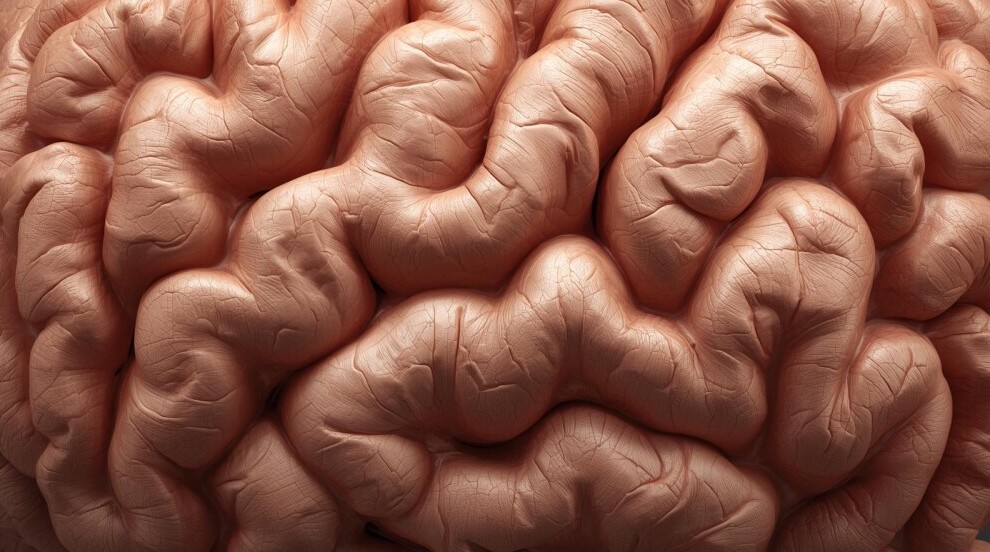
A UCLA study of 50 meditators found pronounced group differences indicating heightened levels of gyrification across a wide swatch of the cortex, with a direct correlation between the amount of gyrification and the number of meditation years. Your brain literally becomes more complex and capable with extended practice.
Neuroplastic Changes Become Self-Reinforcing
After years of practice, something magical happens: your brain enters a positive feedback loop. The structural changes make meditation easier and more effective. Easier meditation leads to more consistent practice. More practice creates further structural enhancement.
Eventually, qualities developed in meditation—calm, awareness, focus—become trait characteristics. You’re not just someone who meditates. Your brain has become a “meditator’s brain.”
The Cumulative Effect: Compound Interest for Your Brain
Think of brain change like compound interest: First 8 weeks, you notice improvements. First year, improvements become reliable. Years 2-5, transformation becomes structural. Years 5+, you’ve become fundamentally different at a neurological level.
Real-World Meaning for Your Anxiety
- Year 1: You’re managing anxiety better through conscious effort
- Year 3: Anxiety triggers affect you less automatically—your brain responds differently
- Year 5: Your baseline anxiety level is fundamentally lower—you’re a calmer person
- Year 10+: Anxiety becomes an occasional visitor rather than constant companion
The Most Important Insight
Long-term meditation doesn’t just give you better tools for managing anxiety—it changes who you are at a biological level. Your brain physically becomes less anxious. The neural structures that generate and maintain anxiety are weakened while structures supporting calm, awareness, and emotional balance are strengthened.
This isn’t about coping with an anxious brain. It’s about transforming into someone with a different brain.
The changes are:
- Physical and measurable (not just psychological)
- Cumulative (building over years)
- Protective (preventing age-related decline)
- Trait-forming (changing your fundamental nature)
- Self-reinforcing (making further practice easier)
Frequently Asked Questions
Q: How long do I need to meditate each day to see these long-term changes?
Research suggests that consistency matters more than duration. Most studies showing significant brain changes involved participants practicing 20-30 minutes daily. The key is making it a regular habit rather than sporadic marathon sessions.
Q: Will I lose these brain changes if I stop meditating?
Many of the structural changes persist even during breaks from practice. However, the functional benefits (like improved stress response) are best maintained with continued practice. Think of it like physical fitness: you won’t immediately lose all your gains, but maintenance matters.
Q: Do different types of meditation create different brain changes?
Yes! Different practices emphasize different brain regions. Mindfulness meditation particularly affects the prefrontal cortex and amygdala, while compassion meditation shows stronger effects in areas related to empathy. Most meditation practices create overlapping beneficial changes.
Q: I’m in my 50s or 60s—is it too late to see these benefits?
Absolutely not! The brain maintains neuroplasticity throughout life. Studies have shown that meditation can help preserve brain tissue and slow age-related decline even when started later in life.
Q: Can meditation help with clinical anxiety disorders?
While meditation can be a powerful tool, it should complement—not replace—professional treatment for clinical anxiety disorders. Many therapists now incorporate mindfulness-based techniques alongside traditional therapy. Always consult with healthcare providers about your specific situation.
My Personal Experience
I started meditating not because I was naturally calm, but because I was desperate. Anxiety had turned my life into constant emergency mode. Years later, I can tell you that the person writing this article has a different brain than the one who first sat down to meditate with trembling hands and a racing heart.
The anxious thoughts still visit sometimes. But now they’re like clouds passing through the sky rather than the whole weather system. That shift didn’t happen in eight weeks. It happened gradually, structural change by structural change, over years of showing up to practice.
Around year three or four, meditation stops feeling like work. Your rewired brain actually craves the stillness. That’s when you know the transformation has moved from state to trait.
Starting Your Journey

Whether you’re brand new to meditation or have been practicing for a while, remember: every session is literally changing your brain. Those days when meditation feels hard? Your brain is working, building new connections, strengthening helpful pathways.
You don’t need to wait years to feel better—the initial benefits come quickly. But the profound transformation, the kind that makes you a fundamentally different person at a neurological level? That’s the gift that years of practice bring.
Your brain is waiting to be transformed. All you need to do is show up.
Disclaimer: The information provided in this article is for educational purposes only and is not intended to diagnose, treat, cure, or prevent any disease or health condition. While meditation has been shown to have numerous benefits, it should not replace professional medical advice, diagnosis, or treatment. Always consult with qualified healthcare providers regarding any mental health concerns or before beginning any new wellness practice, especially if you have existing medical or psychological conditions.
What’s been your experience with meditation? Are you just starting out, or have you been practicing for years? Have you noticed shifts in how your brain responds to stress over time? I’d love to hear about your journey, your struggles, and your wins in the comments below. Your story might be exactly what someone else needs to hear today.
With love,
Deeana — Meditate4Calm