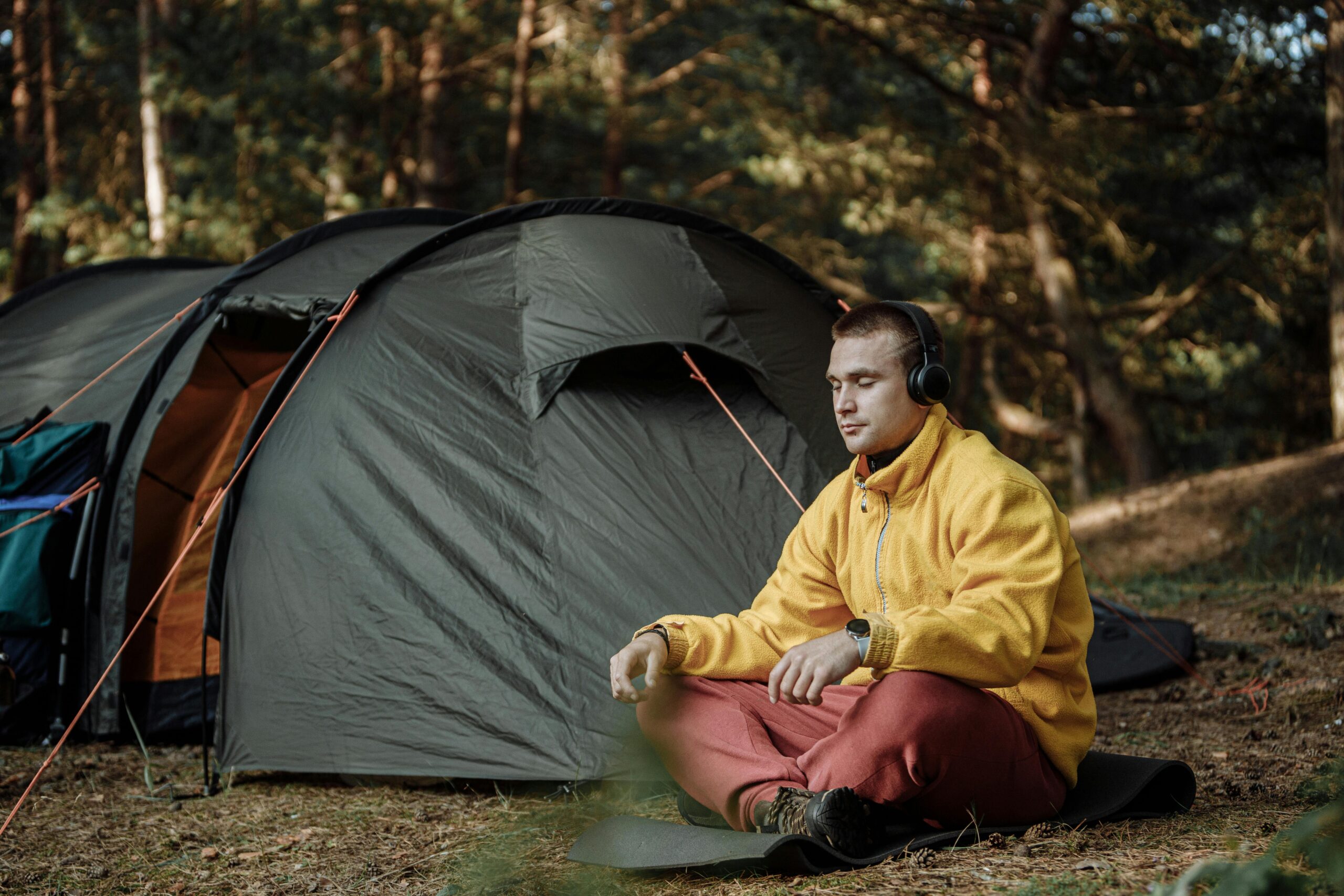
Which Is Better For Anxiety?
Picture this: You finally sit down to meditate. You open an app, press play, and a soothing voice begins guiding you through breathing exercises. Ten minutes later, you feel calmer, more centered. Success, right?
The next day, you try meditating without guidance—just you, silence, and your thoughts. Within 90 seconds, your mind is racing through your grocery list, replaying yesterday’s awkward conversation, and planning next week’s schedule. You feel like you’ve failed at meditation.
Sound familiar?
As someone who has navigated my own anxiety journey through meditation, I’ve wrestled with this exact question: Is guided or unguided meditation better for anxiety? The answer surprised me—and it might surprise you too.
Here’s the truth: It’s not about choosing one over the other. It’s about understanding what each offers and using them strategically as you develop your practice.
Why This Question Actually Matters
When anxiety has your mind in a chokehold, the way you meditate can mean the difference between building lasting resilience and simply creating another dependency. I learned this the hard way—relying exclusively on guided meditations for months, only to discover I couldn’t self-regulate when my phone died during a particularly stressful moment.
Research from Johns Hopkins University analyzed nearly 19,000 meditation studies and found that mindfulness meditation programs show moderate evidence of improving anxiety and depression. But what they didn’t highlight enough is that how you practice matters just as much as whether you practice.
Guided Meditation: Your Mental Training Wheels
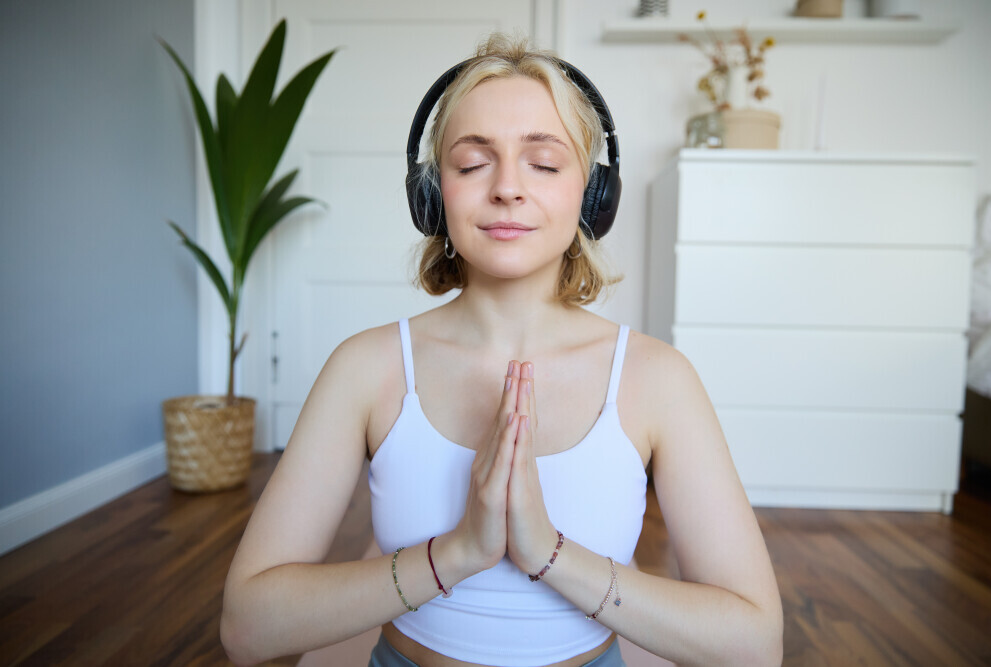
External Anchors for Racing Minds
When anxiety has you in its grip, your thoughts bounce around like a pinball machine on overdrive. This is where guided meditation shines.
Guided meditation provides continuous verbal cues—external anchors that function like guardrails for your wandering attention. When a calm voice says “now notice your breath” or “bring awareness to your feet,” it interrupts your brain’s default tendency to spiral into worry loops before they gain momentum.
Studies from the University of Maryland found that people with moderate to severe anxiety report 40-50% less mind wandering during guided sessions compared to unguided practice. That’s significant—it means your brain gets more actual practice staying present rather than rehearsing worst-case scenarios.
Think of it this way: Guided meditation is like having a personal trainer at the gym. They’re there to correct your form, keep you motivated, and make sure you’re actually working the right muscles.
When Guided Works Best
Use guided meditation when:
- You’re just starting out and need to learn the basics
- Anxiety levels are sky-high and self-regulation feels impossible
- You’re exploring new techniques like body scans or loving-kindness
- Resistance is strong and you need external structure
- You’re feeling isolated and benefit from a teacher’s presence
I remember during my most anxious periods, I couldn’t even decide how to meditate without spiraling. Having someone guide me through the process removed that decision fatigue and just let me show up.
Unguided Meditation: Building Your Inner Compass
The Self-Sufficiency Factor
Here’s where the plot thickens: While guided meditation provides immediate relief, unguided practice develops the self-regulation skills that must ultimately come from within.
Sitting in silence forces you to generate your own structure, notice when attention wanders without external prompting, and choose when to return focus. These are executive functions that strengthen with practice.
Consider this analogy: Guided meditation is assisted exercise with machines. Unguided meditation is free weights that require balance and coordination. Both build fitness, but free weights develop functional strength that transfers to real-world situations.
The crucial insight: People who rely exclusively on guided meditation sometimes struggle to self-regulate in daily life when no external voice is available. When anxiety strikes during a meeting, in traffic, or at 3 AM, you won’t have your app handy.
What Unguided Practice Reveals
Unguided meditation reveals what your mind does naturally—how quickly attention wanders, what themes dominate, and your actual concentration capacity.
Many people feel “good at meditation” with guidance but discover significant anxiety patterns only visible in silence. This revelation, while sometimes uncomfortable, provides essential self-knowledge that shows exactly where growth is needed.
As research from Harvard University suggests, mindfulness practices literally change brain structure over time—but this neuroplasticity requires you to actively engage your brain’s self-regulation systems, not just passively receive instructions.
Your Anxiety Type Matters
Not all anxiety responds the same way:
Generalized Anxiety: Benefits from guided meditation’s structured redirection, preventing worry-hopping.
Social Anxiety: May improve faster with unguided practice in private, avoiding the vulnerable feeling of following instructions.
Performance Anxiety: Responds well to guided progressive muscle relaxation.
Panic-Prone Individuals: Initially need guided sessions to feel safe, gradually transitioning to unguided.
Health Anxiety: Sometimes worsens with detailed body scan guidance. Often benefits more from unguided breath-only approaches.
The Quality Question: Not All Guidance Is Equal
Poor guidance can actually increase anxiety.
High-quality guided meditation includes:
- Appropriate pacing (neither rushed nor painfully slow)
- Permission-based language (“you might notice” vs. “you will feel”)
- Trauma-informed cues (offering choices about eye closure)
- Realistic framing (not promising instant peace)
- Authentic voice qualities (calm but not monotone)
Red flags:
- Unrealistic promises of instant relief
- Forced visualization that doesn’t work for everyone
- Excessive new-age language that feels alienating
- Instructions that increase body hypervigilance
The teacher or app quality matters as much as the guided versus unguided distinction.
The Cognitive Load Factor
Here’s a neuroscience angle: Guided and unguided meditation impose different cognitive demands.
Guided meditation requires language processing, instruction following, and coordination—using executive function resources. For cognitively exhausted or highly anxious people, this can feel overwhelming. Simple unguided breath focus might actually be more restorative.
Conversely, when anxiety creates difficulty generating internal structure, guided meditation’s external organization reduces cognitive load by providing ready-made scaffolding.
The Strategic Integration Blueprint
The most effective long-term strategy uses both formats strategically.
Phase 1: Foundation Building (Weeks 1-4)
Focus: 80-90% guided meditation
Goals:
- Learn basic techniques
- Build confidence
- Find teachers whose style resonates
Tip: Try 3-5 different teachers or apps. Notice which voices and pacing feel supportive versus irritating.
Phase 2: Scaffolding (Weeks 5-12)
Focus: 50/50 guided and unguided
Try:
- Start with 5-10 minutes guided, continue 5-10 minutes unguided
- Alternate guided and unguided days
- Use timer apps with opening/closing bells only
Goal: Build confidence in your own capacity while applying techniques independently.
Phase 3: Independence (3+ Months)
Focus: 70-80% unguided with strategic guided sessions
Use guided for learning new techniques, refreshing motivation, or support during difficult periods.
Use unguided for daily practice, building self-regulation, and portable practice without technology.
For more exploration of different techniques, read my article on different types of meditation for beginners.
Technique-Specific Tips
Body Scan: Almost always needs guidance initially—too complex to self-direct.
Breath Awareness: Works well unguided once you understand the basics. Simple and portable.
Loving-Kindness: Often more powerful guided with specific phrases and direction.
Open Awareness: Requires initial guidance to understand, then benefits from unguided practice.
If you’re curious about fundamentals, check out my article explaining what meditation is and how it helps with anxiety.
The Dependency Warning
Some practitioners develop “guided meditation dependency.”
Signs:
- Feeling lost without guidance
- App addiction or inability to meditate without your phone
- Anxiety increases when attempting unguided practice
- Can’t sit even briefly without voice instruction
If this describes you, gradually increase unguided time. Start with just 2 minutes after your guided session, then progressively extend it.
Practical Hybrid Approaches
The Bookend: 3-5 minutes guided settling → 10-15 minutes unguided → 2-3 minutes guided closing
The Periodic Check-In: Unguided practice with timer bells every 5 minutes as gentle reminders
The Personal Recording: Record yourself giving instructions—you’re both teacher and student
The Progressive Fade: Use guidance that gradually becomes more sparse each week
Real Talk: What Actually Works
Most people need guidance to start. Trying to figure out meditation while anxious is like learning to swim while drowning.
Most people eventually outgrow exclusive guidance. Never removing the training wheels means never developing full cycling skills.
The sweet spot: Using each format for what it does best, transitioning fluidly based on current needs.
Some days, my anxiety is so high that I need external structure. Other days, I sit in silence and work with whatever arises. Both are meditation. Both are valid.
The Ultimate Answer

So which is better for anxiety—guided or unguided?
Neither. Both. It depends.
The most sophisticated approach recognizes that:
- Guided meditation provides essential training, structure, and support
- Unguided meditation builds independent self-regulation capacity
- Your needs change based on experience, anxiety levels, and life circumstances
- Integration and flexibility matter more than dogmatic adherence to one format
The goal isn’t perfect meditation. The goal is developing practices that actually help you navigate anxiety in real life.
Your Journey Starts Here
Whether you begin with guided, unguided, or some combination—just start.
My suggestion:
Week 1: Try guided exclusively. Find what feels supportive.
Week 2-3: Continue guided but experiment with 2-3 minutes of silence at the end.
Week 4+: Play with the ratio. Notice what serves you. Trust yourself.
There’s no meditation police. The practice you’ll actually do consistently is infinitely better than the theoretically perfect practice you avoid.
Frequently Asked Questions
Q: How long should I practice guided before trying unguided?
A: Most people benefit from 4-8 weeks of primarily guided practice, but you can experiment with brief unguided moments (2-3 minutes) much earlier. Listen to your experience rather than rigid rules.
Q: Can I mix guided and unguided in the same session?
A: Absolutely! The bookend approach (guided beginning/ending with unguided middle) works beautifully. This provides structure while building independence.
Q: What if I feel more anxious during unguided meditation?
A: This is common and provides valuable information. Unguided practice reveals your mind’s natural patterns. If this happens: return to guided practice longer, start with very short unguided periods (2-5 minutes), or use a timer with periodic bells. Consider professional support for severe anxiety.
Q: Is it okay to always use guided meditation?
A: Guided meditation is valid and beneficial. However, complete inability to practice unguided might signal: you need more time/exposure, anxiety levels requiring professional support, or dependency patterns worth exploring. Some people genuinely do better with guided long-term—meditation should serve you, not create stress.
Q: Can I use music during unguided meditation?
A: Background music or nature sounds provide gentle structure without verbal instruction—a middle ground between fully guided and silent. Ensure the music supports rather than distracts from your practice.
Q: How do I know if meditation is “working” for my anxiety?
A: Look for changes in how you relate to anxiety rather than its absence. Success indicators: noticing anxiety earlier, recovering faster from anxious episodes, less identification with anxious thoughts (“I notice anxiety” vs. “I am anxious”), more calm moments throughout the day, and improved ability to stay present during difficulty. Changes appear gradually over weeks and months.
A Final Note
Meditation isn’t a cure-all for anxiety—it’s a practice. Some days it feels miraculous. Other days it feels pointless. Both are part of the journey.
What meditation has given me isn’t a life without anxiety—it’s a life where anxiety no longer makes all my decisions. Where I can notice worry-thoughts without believing they’re absolute truth. Where I have tools that actually work when I need them.
That’s what I wish for you too.
I’d love to hear from you: Are you team guided, team unguided, or somewhere in between? What’s been your experience with both approaches? Drop your story, questions, or wins in the comments below—your experience might be exactly what someone else needs to hear today.
With love,
Deeana — Meditate4Calm

Medical Disclaimer: This article is for educational and informational purposes only and is not a substitute for professional medical advice, diagnosis, or treatment. Always seek the advice of your physician or qualified mental health provider with any questions regarding anxiety, meditation practice, or medical conditions. Never disregard professional medical advice or delay seeking it because of something you have read here. If you are experiencing severe anxiety, panic attacks, or thoughts of self-harm, please contact a mental health professional or crisis helpline immediately.
10 Comments
Mathew
How has any of this helped you? You mentioned you knit picked small things towards partners and lashed out, do you still do that? Do you feel that might’ve been unfair?
Deeana
Thank you so much for your time and questions.
Yes, meditation has genuinely helped me with these patterns, but it’s been a gradual process, not an overnight transformation. Through consistent practice, I’ve developed what I call a “pause button”—that brief moment between feeling triggered and actually reacting. In the beginning, I’d still lash out and only recognize it afterward. Over time, I started catching myself mid-reaction. Now, more often than not, I can pause before responding.
Do I still have moments where I slip into old patterns? Honestly, yes. But the frequency & intensity has decreased significantly, and more importantly, I now recognize it’s happening. That awareness itself changes everything—it allows me to apologize more genuinely and address the underlying anxiety or stress that’s actually driving the behavior.
As for whether it was unfair—absolutely, it was. Meditation hasn’t just helped me manage anxiety; it’s also helped me develop compassion for both myself and others. I can now see that when I was lashing out, I was often projecting my own internal discomfort onto my partners. That doesn’t excuse the behavior, but understanding it has helped me make real changes.
The beautiful thing about meditation is that it cultivates both awareness and self-compassion simultaneously. You can acknowledge past unfairness while also being gentle with yourself about your journey forward.
I’m curious about your own experience: Have you noticed any shifts in how quickly you recognize these patterns? What does it feel like in your body right before you find yourself nitpicking or feeling reactive? Are you struggling with this in your relationship?
Thank you again for reaching out.
With Love
Deeana
Mathew
I never struggled with it in a relationship, I always have had healthy coping mechanisms like video games, or going to the gym to make sure I never went off the hinges. During my last relationship, I stood back from A partner who was extremely reactive, because it was causing my own demons to come out along with causing a very unhealthy power dynamic. I was only ever reactive once, and it was alarming because I realized I was becoming something I didn’t want to be even still passive remarks didn’t help or fix the situation. I had to learn that they had to acknowledge it themselves even if it meant them lashing out at me and cutting me out of the equation because I was the one changing as a person to please them.
Deeana
Thank you for sharing this—it sounds like you’ve done some really important work in recognizing what you need in a relationship and honoring your own boundaries.
It’s excellent that you’ve developed healthy coping mechanisms like video games and the gym to manage stress. I can absolutely relate to the gym being a huge help—it’s been one of my anchors as well. The fact that you caught yourself becoming reactive just once and found it alarming shows how in tune you are with your values and who you want to be. Recognizing when a relationship dynamic wasn’t right for you and having the courage to step back, even when your partner was lashing out, takes real strength.
You’re absolutely right that people have to acknowledge their own patterns themselves—we can’t fix or change others, no matter how much we want to help. It sounds like you learned that difficult lesson while staying true to yourself rather than continuing to change to please them.
My journey has looked quite different. I didn’t grow up knowing what healthy relationship dynamics looked like or how they worked. I struggled for a long time without those foundational tools, which meant I brought reactive patterns into my relationships that hurt both myself and my partners. Meditation and personal growth have been essential in helping me get to where I am now—learning to recognize my triggers, develop that pause before reacting, and understand what healthy communication actually looks like.
It sounds like you came into adulthood with much healthier foundations than I did, and that’s something to be genuinely proud of.
I appreciate you taking the time to respond back to my messsages!
Mathew
Yeah, and the real question comes into play is will you ever love the same again? what will you decide to take on so you don’t repeat the same mistake. how will you become just better so you can have a safe & peaceful life.
Deeana
That’s a profound question, and honestly, one I’ve asked myself many times: will I ever love the same again? The truth is, I won’t—and that’s actually the point. I don’t want to love the same way I did before, because that version of love was tangled up with my anxiety, reactivity, and unhealthy patterns. What I’m working toward is loving in a way that’s healthier, more conscious, and grounded.
To avoid repeating the same mistakes, I’ve had to get brutally honest with myself about my triggers and patterns. I committed to staying single for over 6 years to work on myself. I needed to focus on me so that when the right person came around, I would have the emotional maturity to manage and work through triggers in a healthy way. I’ve committed to consistent meditation practice, therapy, and the gym as an outlet. But more than that, I’ve had to accept that growth doesn’t mean perfection—it means catching myself sooner, apologizing more genuinely, and being willing to do the hard work even when it’s uncomfortable.
I’m now in a loving relationship, and I can happily say that I’ve changed a lot of those patterns. It’s not perfect, but it’s so much healthier than anything I’ve experienced before. The work was worth it, and building something safe and peaceful is possible when we’ve truly done the inner work.
It sounds like you’ve walked a similar path, and I’m genuinely happy for you. Congratulations on the growth you’ve achieved and the relationship you’ve built.
Thank you again for reaching out.
Matthew
My last relationship was a year ago, I assumed yours was also really recent. I would have never known you’ve been single for six years. The abuser I was with just seems to live in constant denial, and projects shortcomings towards others and makes fake narratives. It honestly is very sad and depressing because shes a heavy drinker which is gonna age her the most.
Deeana
Yes, I’ve spent a lot of time working on myself these past six years, and I’ve grown so much simply by learning how to focus inward. Before that, I was always in relationships and honestly afraid of being alone. Now I know that no matter what happens — whether I’m in a relationship or not — I’m going to be okay. That inner stability has become one of the biggest gifts of my healing.
I’m really sorry to hear about what you went through in your last relationship. Being connected to someone who lives in denial or projects their pain onto others can take such a heavy toll emotionally. It’s understandable that seeing those patterns, especially when combined with unhealthy coping habits, feels sad and draining. I hope you’re giving yourself a lot of compassion as you continue to move forward from that experience.
Mattew
I am but she’s using it as a vice to employ attention, never really taking the steps to do anything. Telling the world doesn’t change anything because none of it is personal and sugar coating the lines of reality. Being enlightened she calls it, but I see it as a fallacy.
Deeana
I hear what you’re saying. It’s tough watching someone stay stuck in the same cycles, especially when they use the idea of “awareness” or “enlightenment” without actually doing the inner work. Real change doesn’t come from talking about growth — it comes from taking responsibility and making different choices.
But at the end of the day, her journey isn’t yours to carry. Some people stay in denial because it feels safer than facing themselves. You’re choosing a different path by actually reflecting, healing, and taking accountability. That’s what sets your growth apart.
Stay Strong 🙏