Meditation itself is a simple activity, but not always easy. Anyone who has tried to sit quietly with their thoughts knows this.. the mind loves to jumps around & the body wants to fidget. One moment you’re focused on your breath… and the next you’re planning tomorrow’s grocery list, replaying a conversation from 2017, and wondering if penguins have knees. 😭😂
I’ve been practicing meditation for years, and even now I still have days where my mind feels like a browser with way too many tabs open and i have no idea where the music is coming from. Can you relate? 😂
But there is definitely hope. Living in this incredible internet age, we have access to so many supportive tools that can make a real difference.
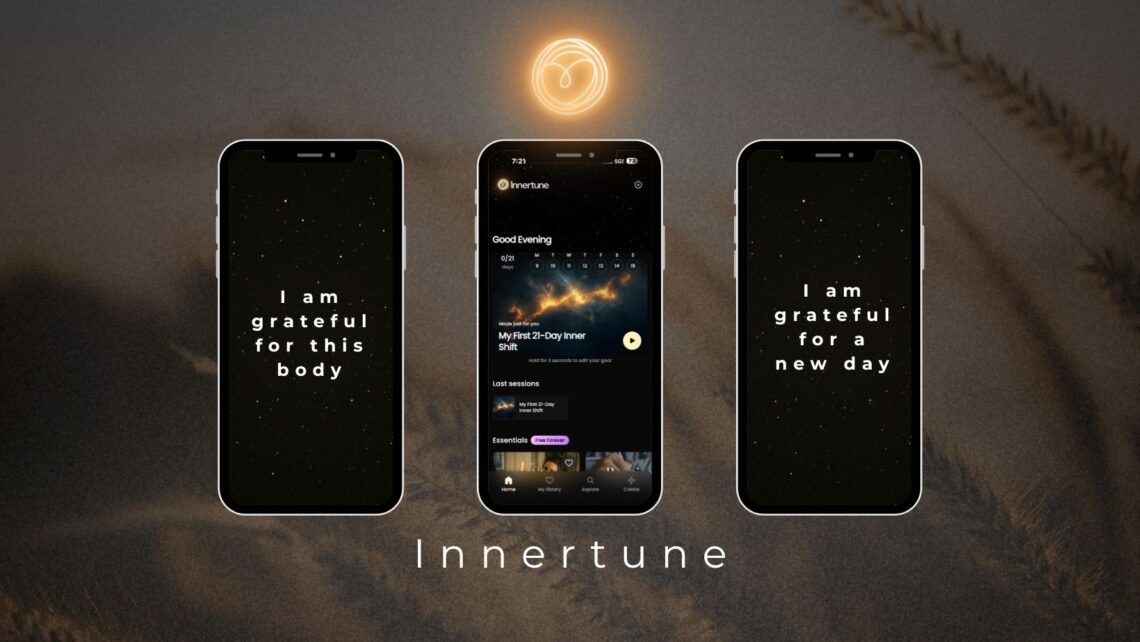
One tool I’ve been diving deep into is the Innertune app. It blends affirmations with calming soundscapes and subconscious programming techniques that help guide the mind into relaxed & receptive states.
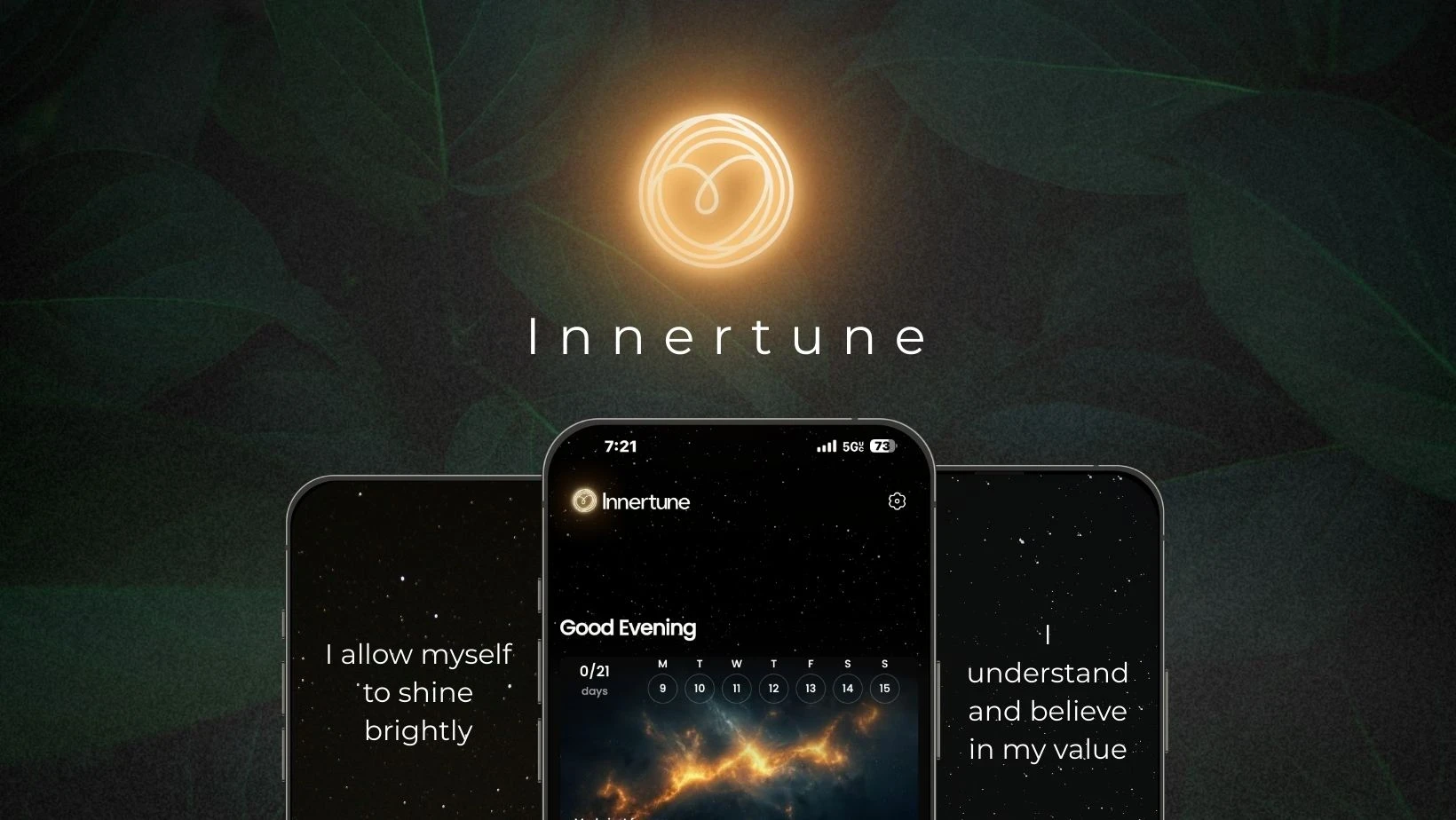
You can read my deeper breakdown of the app in my article Innertune App Rewiring Positive Affirmations
But today I want to talk about something a little different. I want to explore how you can incorporate the Innertune app into your meditation practice. Affirmations are a powerful tool, but in my experience they work even better when combined with other practices like meditation. When used intentionally, this combination can create a powerful bridge between traditional meditation and subconscious reprogramming.
So if you’re ready, let’s dive in and take a closer look!
Affiliate Disclosure: This article contains affiliate links. If you choose to purchase or sign up through these links, I may earn a small commission at no extra cost to you.
Why Combine Affirmations and Meditation?
Meditation and affirmations are often talked about as separate practices.
But they work beautifully together.
Meditation creates awareness and stillness.
Affirmations help reshape your inner dialogue.
I like to think of it like this. Meditation clears the mental clutter that builds up in our minds and creates space, quiet, and awareness. Once that space opens up, affirmations can be placed there. I like to think of them as seeds, gently introducing more supportive thoughts and beliefs that can slowly grow and take root.
Research supports the idea that mental repetition and focused awareness influence brain activity.

A study published in Social Cognitive and Affective Neuroscience found that self affirmation activates brain regions associated with reward and self related processing, which can strengthen positive behavior change patterns.
So when you combine meditation and affirmations, you’re essentially working with both awareness and subconscious conditioning. That’s one of the reasons I really appreciate apps like Innertune they’re designed to help make this process easier and more supportive.
If you’re curious about Innertune and want to explore it a little further, you can take this quick quiz to see how it might support your mindset and meditation practice:
So how can we actually incorporate it into meditation? Let’s explore a few simple ways.
1. Use It to Enter a Relaxed State
One of the biggest challenges people face with meditation is getting out of thinking mode.
The mind is used to constant stimulation.
So when we suddenly sit down and say “okay brain… be quiet now,” it doesn’t always cooperate.
This is where Innertune can act as a gentle bridge into meditation.
The combination of:
• calming background sounds
• slow paced affirmations
• rhythmic repetition
helps the nervous system begin to relax.
Instead of forcing silence, you’re allowing your mind to gradually settle.
So how can we actually use the app to support our meditation practice?
Here is a simple way to try it.

Start by playing an Innertune affirmation track for about five to ten minutes. Close your eyes and allow the calming sounds and affirmations to gently slow your breathing.
After a few minutes, pause the audio and continue your meditation in silence.
Something interesting often happens when you do this. By the time the audio stops, your mind is already much calmer and your body has had a chance to settle.
That transition into silence tends to feel much smoother.
Meditation begins to feel less like a mental wrestling match and more like a natural continuation of the relaxed state you have already created.
If you are someone who struggles to drop into meditation quickly, this approach can make the process feel much more accessible and supportive.
2. Let Affirmations Become Your Focus
In traditional meditation, your anchor is usually the breath. The gentle rise and fall of breathing gives the mind something steady to return to whenever it starts wandering but the breath is not the only possible anchor.
Many meditation traditions also use mantras or repeated phrases to help keep the mind centered. Instead of focusing on the breath, the practitioner focuses on the repetition of a word or phrase this is where affirmations naturally fit in.

When you are listening to Innertune during meditation, the affirmations themselves become the focus point for your attention. Rather than trying to hold onto the breath, you simply listen to the words and allow them to guide your awareness.
And when your mind drifts, which it naturally will, you gently bring your attention back to the affirmation you are hearing. Just like returning to the breath.
For example, imagine the affirmation says:
“I am calm. I am grounded. I trust myself.”
Your practice becomes incredibly simple. You listen. You breathe. And you focus on the affirmation.
There is no need to force the mind to be perfectly quiet. The affirmations act as a gentle guide, helping your attention settle.
This style of meditation can be especially helpful for people who find silent meditation challenging or frustrating at first. Many people discover that the mind actually relaxes more easily when it has something to focus on.
The mind likes having something to gently hold onto & affirmations can help with that.
3. Combine It With Slow Breathing
One of my favorite ways to deepen the experience is by pairing affirmations with slow, intentional breathing.
When you slow your breath, something powerful begins to happen in the body. Slow breathing activates the parasympathetic nervous system, which is the part of the nervous system responsible for rest, relaxation, and recovery.
In simple terms, slower breathing sends a signal to the brain that says, you are safe. The body softens, the mind becomes quieter, and the nervous system begins to settle.
This relaxed state is actually the perfect environment for affirmations to land more deeply.
Here is a simple practice you can try when using the Innertune App:
Start by listening to an affirmation track.
Inhale slowly as you listen to the affirmation.
Exhale slowly and allow the body to soften and relax.
Let the words settle into your awareness as you breathe.

You can also repeat the affirmation quietly to yourself or out loud. Personally, I recommend saying it out loud when you can. Hearing your own voice speak the words and feeling the vibration of the affirmation can make the experience even more powerful and grounding.
As you continue breathing and listening, you might begin to notice something interesting happening.
The affirmations slowly start to feel less like words you are hearing and more like experiences you are feeling.
They begin to land differently & that is often where real change begins. Because transformation rarely comes from mechanically repeating words over and over. Real shifts tend to happen when the body, the mind, and the nervous system all begin to feel the truth of what is being said.
When affirmations move from being something you are simply saying to something you are actually feeling, they start to create a much deeper impact.
4. Use It During Relaxed Brain States
Timing actually matters more than most people realize.
Dr. Joe Dispenza, a neuroscientist, researcher, and author known for his work on meditation and the mind body connection, often explains that the most powerful times to practice meditation are early in the morning and later in the evening.

I like to combine meditation with affirmations during these times because the two practices together can be incredibly supportive for personal growth. During these natural transition periods, the brain shifts between conscious and subconscious states, which makes the mind more receptive.
Some of the most supportive times to practice include:
• early in the morning when you first wake up
• right before going to sleep
In the morning, this can be a beautiful opportunity to set the tone for the person you want to become. It’s a chance to begin the day with intention and mentally align with your future self.
Then in the evening, you can slow down, reflect on your day, and review your experiences with greater awareness and compassion.
I’ve personally noticed that affirmations feel more impactful during these times. So if you’re already practicing meditation in the morning or evening, try adding affirmations into that window. It can be a simple but powerful upgrade to your practice.
5. Reinforcement Throughout the Day
One of the biggest challenges for many spiritual individuals is something I hear about often. And honestly, it is something I struggled with a lot in the past too. Not so much anymore, but it definitely used to be a pattern for me.
Tell me if this sounds familiar.
You wake up in the morning, meditate, maybe do some affirmations, journal a little, and suddenly you feel amazing. You feel grounded, peaceful, you are radiating love, calm, and positive energy.
You feel like you are completely on top of the world & then… life happens.
Suddenly you are bombarded with emails. You start thinking about financial worries. Responsibilities start piling up. Someone cuts you off on the highway and before you know it you are yelling at your windshield and questioning all of humanity.

And just like that, the calm mindset disappears & guilt starts to creep in.
Because you think you are supposed to be this calm, spiritual, peaceful person all the time. Radiating love and light no matter what. But the truth is, we are human.
And this is where the real power of meditation comes in. Meditation is not about being perfectly calm all the time. It is about becoming aware. It helps us observe what is happening in our mind instead of getting completely carried away by every thought and emotion.
Thoughts come. Thoughts go & meditation helps us notice without being controlled.
It truly is one of the most powerful tools for building awareness.
When you combine meditation with affirmations and supportive tools like Innertune, it can help reinforce the kind of mental environment you are intentionally trying to cultivate.
And the beautiful thing is, you do not have to always be sitting in a perfectly quiet meditation posture every time.
You can listen to affirmations while:

• walking in nature
• during your morning routine
• on your break at work when your coworkers are driving you slightly insane
• when you feel emotionally triggered
• right after someone cuts you off in traffic and you feel your blood pressure rising
• while journaling
• before bed
• while doing light chores around the house
Life itself can become part of the practice.
You begin noticing your thoughts more often. You pause. You sit with them for a moment. And when needed, you open up the Innertune app and replace those thoughts with more supportive and empowering ones.
Sometimes it is simply about keeping supportive mental input flowing throughout your day.
This helps carry the calm and awareness you cultivated during meditation into the rest of your life. And that is what really matters CONSISTENCY.
Because mindset shifts rarely happen through one huge breakthrough momentcthey happen through small, repeated inputs over time.
My Personal Experience With Affirmations & Meditation
As some of you might know, the day meditation first entered my life was not the same day I actually began practicing it.
Meditation was introduced to me during one of the most challenging times of my life. I was homeless at the time, and I met a man who taught me something he called “light meditation.” At that moment, it felt interesting and intriguing, but if I’m being honest, it was simply an idea that had been planted.
It didn’t immediately take root it wouldn’t begin bearing fruit in the garden of my mind until years later.
After leaving Virginia and moving to Puerto Rico, I began discovering the power of affirmations. Not long after, I also came across the teachings of Dr. Joe Dispenza. Learning about his approach to meditation and the brain completely supercharged my practice.
It actually started with me recording my own affirmations. I would listen to them and share them on an old YouTube channel I was building at the time. I still have a few of those recordings up, and if you’re curious you can listen down below
Combining meditation and affirmations together ended up being the real sweet spot for me.
Working with both practices helped me realize something incredibly powerful. Our minds are far more influential than many of us realize. The brain learns through repetition and emotional association.
When you repeatedly expose your mind to calming thoughts, supportive beliefs, and relaxed states, the nervous system slowly begins to normalize that experience.
Over time, what once felt unfamiliar can begin to feel natural.
Now, are affirmations the end all be all?
Is meditation the ultimate solution to everything?
Of course not.
And can these practices magically heal years of trauma overnight?
Also no.
But can practices like meditation and affirmations be powerful tools on a healing journey?
From my personal experience, absolutely.
Tools like Innertune can be incredibly helpful because they provide structured repetition, something many people struggle to maintain on their own.

Disclaimer: If someone is dealing with serious mental health challenges, these practices should not be seen as a replacement for professional support. The content on this website is for educational and informational purposes only and is not medical advice. It is not a substitute for professional diagnosis or treatment. If you have a medical concern, please consult a qualified healthcare provider.
These tools have been incredibly supportive throughout my own journey, which is why I enjoy sharing them with others who may be exploring their own path of healing, growth, and self awareness.
If you’re curious about Innertune and want to see how it might support your meditation and affirmation practice, you can begin by taking this quick quiz here:
Final Thoughts
I hope this article has helped you in some way, shape, or form. Everything I create here comes from a genuine intention to support others and to remind you that you are far more powerful than you may believe.
I am not perfect, and I am very much still a work in progress. But my experience with meditation, affirmations, and other spiritual tools has been such an incredible journey. I feel deeply passionate about sharing the practices and ideas that have helped me transform my own life.

Your spiritual practice does not have to be perfect.
It does not have to look a certain way.
Some days it will feel easy and natural. Other days it might feel challenging. What truly matters is that you continue showing up for yourself and keep moving forward on your journey.
You never know who you are inspiring simply by continuing to grow, heal, and be yourself.
So if you made it this far in the article, I would genuinely love to hear from you.
What does your spiritual practice look like right now?
Do you meditate?
Do you work with affirmations?
Do you combine the two?
What has helped you the most on your journey so far? And what challenges do you still run into?
If there is anything I can do to support you more on your path, please let me know.
Share your experience in the comments. I truly look forward to hearing your voice.
With love,
Deeana — Meditate4Calm


Whatever we plant in our subconscious mind and nourish with repetition
Earl Nightingale
and emotion will one day become a reality.