How One Woman’s Vision Forever Changed the Way We Think, Feel, and Heal
“Mirror work is the most effective method I’ve found for learning to love yourself and see the world as a safe and loving place.” — Louise Hay
Louise Hay didn’t just write about healing—she made it feel possible. Her work has guided millions toward self-love, inner peace, and the belief that change can begin with a single thought.
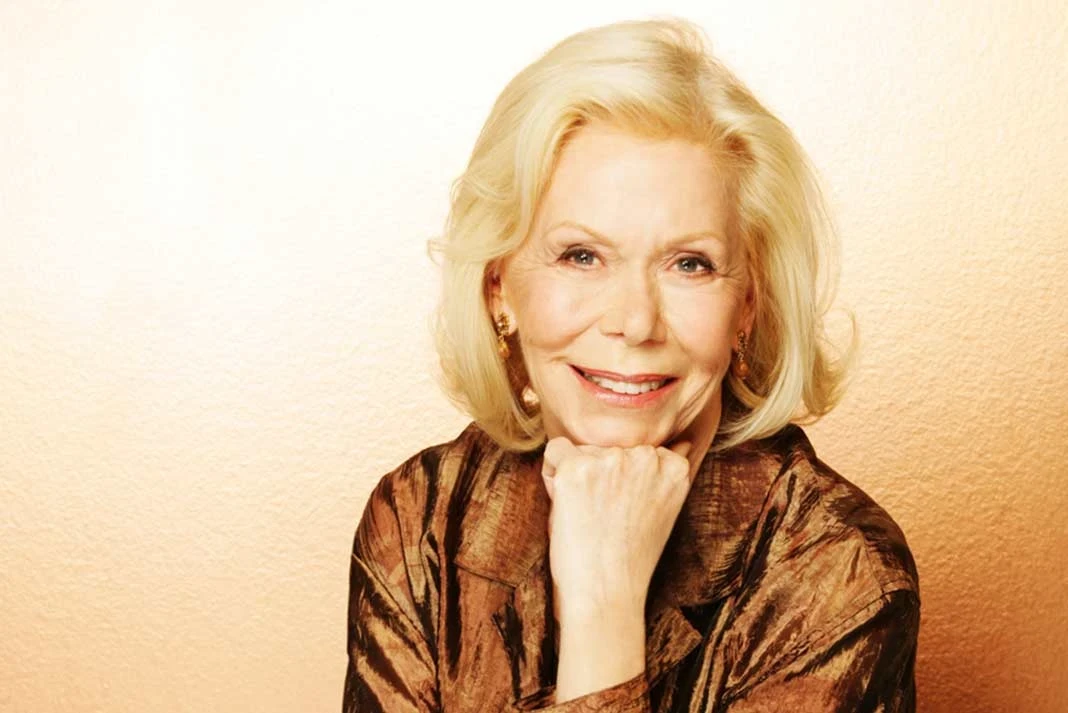
Louise Hay’s voice—soft but unwavering—gave people permission to do something revolutionary: treat themselves with compassion. She taught self-love as a practice you build slowly and intentionally, using tools like affirmations, mind–body awareness, and mirror work.
And her message feels more relevant than ever. In a world where many people look “fine” but feel exhausted—overstimulated, stuck in old patterns, and weighed down by self-criticism—Louise’s work meets the modern nervous system right where it is.
In this article, we’ll explore who she was, why her teachings still matter, and simple practices you can use today.
Affiliate Disclosure: Some links on this site are affiliate links, which means I may earn a small commission at no extra cost to you if you choose to make a purchase. I only share resources I genuinely trust and believe can support you.
A Short Biography: Who Was Louise Hay?

Louise Lynn Hay (October 8, 1926 – August 30, 2017) was an American motivational author, speaker, and the founder of Hay House publishing. She is best known for her book You Can Heal Your Life (first published in 1984), which became one of the most influential self-healing books of all time.
Louise is often associated with New Thought spirituality—the idea that our beliefs shape our experience and that inner transformation can create outer transformation.
But the reason Louise became a global icon wasn’t because she had a perfect life or because she spoke in flawless spiritual language. It was because she spoke about pain in a way that didn’t leave people stuck in it. She modeled transformation.
And that matters.
Because when you’re healing—truly healing—you don’t need perfection. You need truth plus a next step.
Why Louise Hay’s Message Still Matters Today
At the heart of Louise Hay’s teachings is a simple truth: your inner world shapes your outer world. The way you think, feel, and speak to yourself influences your life—and you can create change by changing that relationship.
Today, that message shows up in “modern” approaches like mindfulness (MBSR), CBT reframing, self-compassion research, nervous system work, and trauma-informed emotional regulation. Louise didn’t create these fields, but she helped bring their core truth into everyday life: your thoughts and beliefs shape your stress response, your choices, and how safe you feel in your own body.
That’s why her legacy feels so aligned with what I share here on Meditate4Calm—especially in my article How Affirmations Improve Meditation, where I talk about affirmations as intention and focus that gently guide the mind back toward calm. And honestly? That’s Louise’s message in modern language.
You Can Heal Your Life: The Book That Rewired a Generation
You Can Heal Your Life wasn’t just a bestseller—it became a bridge between spirituality and self-help long before that blend was mainstream.
When Louise talked about doing the “mental work,” she didn’t mean denial or forced positivity. She meant noticing your self-talk, spotting repeated beliefs, understanding emotional patterns like shame or fear, and choosing new thoughts on purpose through affirmations—backed by daily self-acceptance.
That’s why meditation fits so well with her work: meditation builds awareness, and affirmations build intention.
I also dive into this in my article Integrating Affirmations Into Your Meditation, where I share how affirmations can support emotional well-being and help soothe the nervous system—especially when they’re used in a grounded, realistic way.
The Mind–Body Connection: What Louise Taught, and What Science Now Supports
One reason Louise Hay was criticized (and misunderstood) is because people oversimplified her message into: “You can think your way out of illness.”
That’s not a responsible takeaway—and Louise’s work is better read as mind-body integration, not mind-over-matter.
Here’s what modern research supports strongly:
1) Stress impacts the brain and body
Mindfulness training has been associated with measurable changes in brain regions related to emotion regulation, self-referential processing, memory, and perspective-taking.
2) Mindfulness can influence immune and brain function
A classic study by Davidson and colleagues found that mindfulness meditation training produced measurable effects related to brain and immune function.
3) Self-compassion reduces distress

Self-compassion research consistently links greater self-compassion with lower anxiety, depression, and stress.
And this matters because Louise’s affirmations weren’t just “feel good phrases.” They were self-compassion in sentence form.
If your inner voice is harsh, your nervous system doesn’t feel safe.
If your inner voice is kind, your body receives that kindness as safety.
That’s not airy. That’s biology meeting psychology.
Mirror Work: Why It’s So Powerful (and Why It’s So Uncomfortable)
Mirror work is one of Louise’s most famous practices. The official Louise Hay site describes it as a method for learning to love yourself and see the world as safer and more loving.

Here’s why it hits so deeply:
When you look into your own eyes, you can’t hide from yourself.
And for many people, that’s where the pain lives: in self-rejection.
Mirror work brings up:
- shame you didn’t know you were carrying
- the “never enough” story
- old memories of being criticized or unseen
- fear of being truly intimate with yourself
And then—if you stay with it—mirror work rewires your relationship with you.
A Simple Mirror Work Practice (5 minutes)
- Stand or sit in front of a mirror.
- Look into your own eyes—not your hair, not your skin, your eyes.
- Place your hand on your heart.
- Say one of these slowly:
- “I am willing to love you.”
- “I am learning to be on your side.”
- “I am here now.”
- Breathe. Let emotion come if it comes. No forcing.
Quick tip: If “I love you” feels too far, start with “I’m willing.” That one word—willing—keeps it honest.
If you want affirmations that feel grounded and easy to use in real life, I put together 10 Powerful Affirmations to Enhance Your Meditation Practice—it’s a simple internal resource you can come back to anytime.
Hay House: Louise Hay’s Publishing Company and Spiritual Movement
Hay House didn’t just publish books. It changed the self-help landscape.
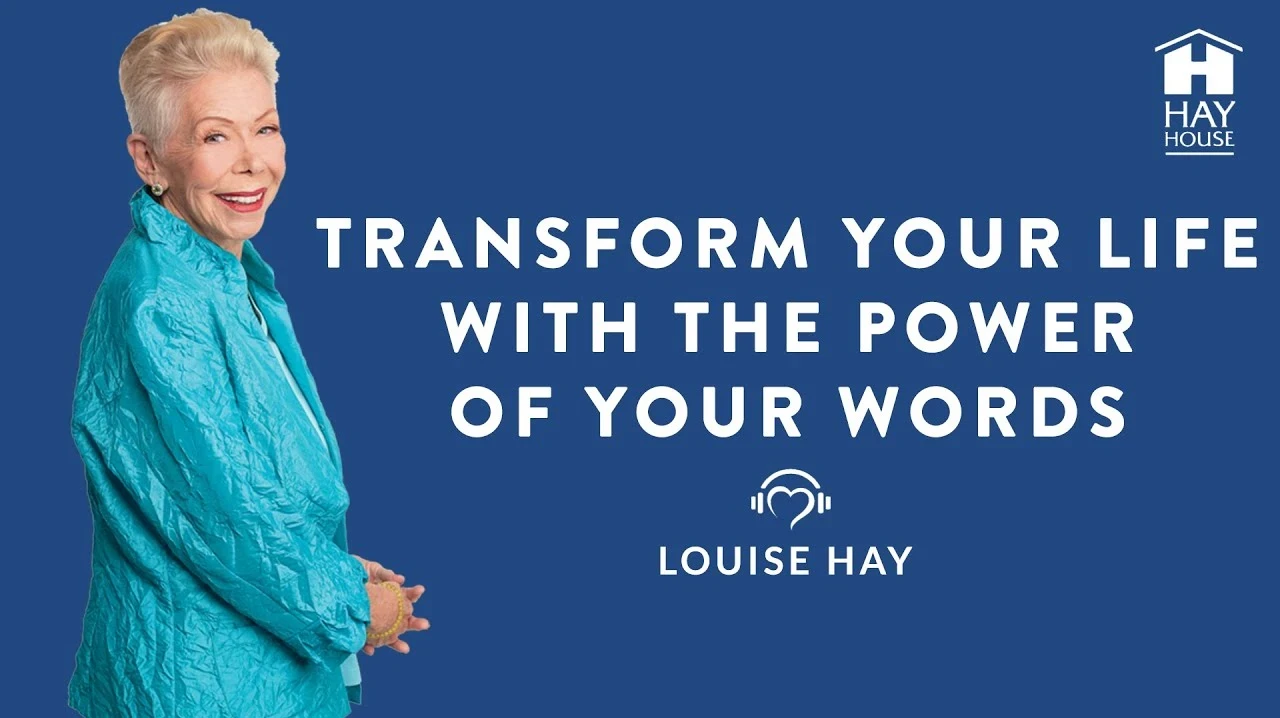
Hay House’s official “About” page notes the company was founded in 1984 (and incorporated in 1987) so Louise could help publish transformational books and audio programs, beginning with works like Heal Your Body and You Can Heal Your Life.
And Louise’s official bio describes how Hay House began small and grew into a worldwide company.
Here’s what’s important about that:
Louise didn’t just teach self-healing—she created a platform for others to teach it too.
Hay House became a home for mind-body-spirit authors, meditation teachers, and personal development leaders. In that sense, Louise didn’t only build a publishing company. She built a global healing ecosystem.
That legacy is part of why so many people today can easily find guided meditations, affirmations, and healing content that once had no mainstream shelf space.
Louise Hay–Inspired Reset Ideas (10–15 minutes a day)
This is where I want you to feel the most supported—because inspiration is powerful, but having a simple structure to come back to is what makes it real. These are just ideas, so take what resonates and leave out what doesn’t. The important thing is having some kind of practice you can return to consistently. I personally recommend doing it in the morning to start your day in the right headspace, but it can be done anytime—you can always make space for it when you’re ready.

1) Start with a Calm Anchor (5–10 minutes)
I like beginning with meditation music—nothing complicated. Just breathing, noticing, relaxing into the music and coming back to the present. (There are tons of Youtube Channels with amazing meditation music)
Try this:
- Set a timer for 5–10 minutes
- Breathe slowly
- When your mind wanders, gently return to your breath
If you want extra support with journaling afterward, I have a guide you can use: 10 Journal Prompts To Inspire Your Daily Meditation.
2) Add One Grounded Affirmation
Instead of repeating a whole list, I recommend choosing one-two affirmations that feel believable and supportive.
Examples:
- “I am safe in this moment.”
- “I can take this one step at a time.”
- “I’m learning to be on my own side.”
If you want a big library to choose from, you can start here: 200 Mindfulness & Meditation Affirmations.
3) Try Mirror Work in a Gentle Way
Mirror work can be intense, so I like starting soft.
Simple mirror practice:
- Look into your eyes (just for a moment)
- Place a hand on your heart
- Say: “I am willing to be kinder to you.”
- Breathe and notice what comes up
You don’t have to force emotion or force belief—showing up is enough.
4) Make Space for Feelings
This is the “emotional permission” piece—letting emotions exist without rushing to fix them.
Try this after meditation:
- Ask yourself: “What am I feeling right now?”
- Name it: anxious, sad, heavy, hopeful, numb—anything
- Then say: “It’s okay to feel this.”
This is not about staying in the emotion—it’s about letting it move through with compassion.
5) Regulate the Nervous System with Breath + Words
This is one of my favorites because it’s simple and calming.
Breath + affirmation:
- Inhale: “I am safe.”
- Exhale: “I am here.”
Repeat for 1–3 minutes.
It’s a small practice, but it can shift your whole state.

6) Add a Forgiveness Release
Forgiveness doesn’t have to be dramatic. Sometimes it’s just choosing to stop punishing yourself.
Write or say:
- “I release the need to punish myself for being human.”
- “I did the best I could with what I knew then.”
- “I’m allowed to begin again.”
7) Weekly Integration Check-In
Once a week (or whenever you can), take a few minutes to reflect:
- What practice helped me the most?
- What felt hard or resistant?
- What do I want to keep doing for the next week?
Even a quick check-in builds momentum.
Quick Tips
- If an affirmation feels fake, soften it with: “I’m willing…”
- Pair affirmations with breath so your body can actually receive the message.
- Don’t use affirmations to bypass emotions—use them to support you while you feel them.
- Consistency matters more than intensity. A few minutes done often beats an hour once in a while.
Where Louise Hay Gets Misunderstood (and How to Hold Her Work Responsibly)
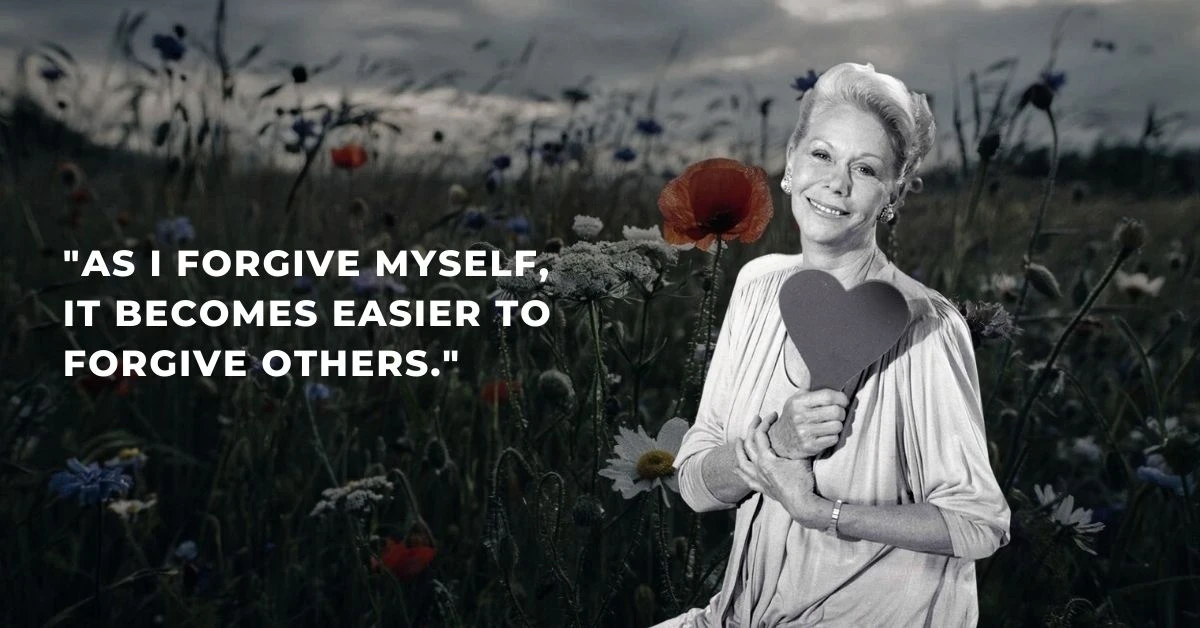
Louise is sometimes criticized for mind-body claims that people interpret as “you caused your illness.”
That interpretation can be harmful.
A more grounded takeaway is:
- Thoughts influence stress.
- Stress influences the body.
- Self-compassion supports resilience.
- Inner work can complement (not replace) medical care.
That’s the way I choose to share her work responsibly—especially here on Meditate4Calm, where I know many of you may be anxious, tender, and honestly tired of feeling blamed for what you’re going through.
What is Louise Hay best known for?
Louise Hay is best known for her bestselling book You Can Heal Your Life (first published in 1984) and for popularizing affirmations, self-love, and mind–body awareness in the modern self-healing movement. For many readers, her biggest impact wasn’t just the ideas—it was how practical she made them: simple phrases, daily repetition, and a consistent return to inner compassion.
Do affirmations actually work?
Affirmations aren’t magic words—but there is evidence that self-affirmation can help people cope with stress and perform better under pressure. For example, a peer-reviewed study found that self-affirmation improved problem-solving performance in chronically stressed individuals (especially those who were underperforming under stress).
The most grounded way to think about affirmations is this: they can support cognitive reframing, strengthen values-based identity, and create a calmer internal script—especially when paired with breathwork, mindfulness, or practical actions.
How do I use Louise Hay’s teachings with meditation?
A simple way is to use meditation for awareness (noticing thoughts and emotions without judgment), then use affirmations for intention (choosing a supportive direction for your mind and nervous system). If your mind tends to spiral, one steady affirmation can function like a gentle anchor—something to return to instead of getting pulled into fear-based stories.
Here are two internal starting points on Meditate4Calm:
Is Louise Hay’s approach compatible with therapy?
Often, yes—especially where her message overlaps with evidence-supported foundations like self-compassion, mindfulness, emotional regulation, and cognitive reframing. In modern clinical research, self-compassion is consistently associated with lower anxiety, depression, and stress, and compassion-based interventions are widely discussed as supportive for resilience and wellbeing.
Medical Disclaimer: This content is for educational purposes only and isn’t medical or mental health advice. If you’re struggling or in crisis, please contact a qualified professional or local emergency services right away.
Final Reflection: Why Louise Hay’s Legacy Still Matters (To Me)

Louise Hay’s legacy shows up for me in the quiet moments—the ones no one sees, but everything shifts because of them.
It’s when I notice my thoughts spiraling and choose to pause.
When I catch my inner critic and soften.
When a day feels heavy and I still choose one loving thought, one steady breath, one reminder that I’m safe right now.
When I sit down to meditate—not because I’m perfect at it, but because I deserve peace.
I’m not chasing a perfect spiritual life. I’m building a safe relationship with myself, one compassionate choice at a time. Louise helped millions begin that relationship, and her message still guides me—especially when healing feels slow.
That’s why I created Meditate4Calm: a grounded space to come back to yourself, breathe, and remember your worth. And when I share pieces of my own journey, it’s to remind you that you’re not alone—and real change is possible.
If you’d like to read more of my story, you can find it on my About Me page.
💬 I’d love to hear from you. Have you ever used Louise Hay’s techniques—like affirmations or mirror work? What shifts, challenges, or breakthroughs have you noticed in your healing journey? Drop a comment below so we can support and inspire each other.
With love,
Deeana — Meditate4Calm

“The greatest glory in living lies not in never falling, but in rising every time we fall.” – Nelson Mandela.