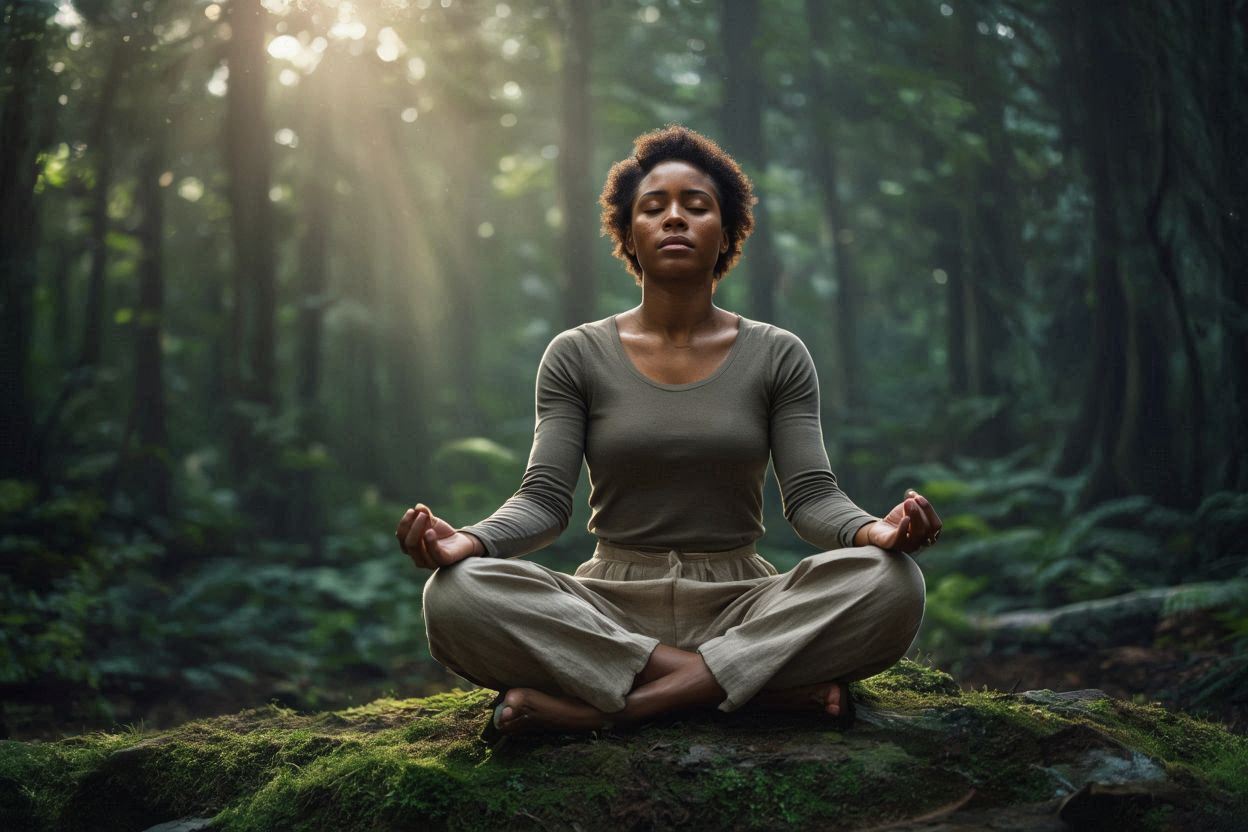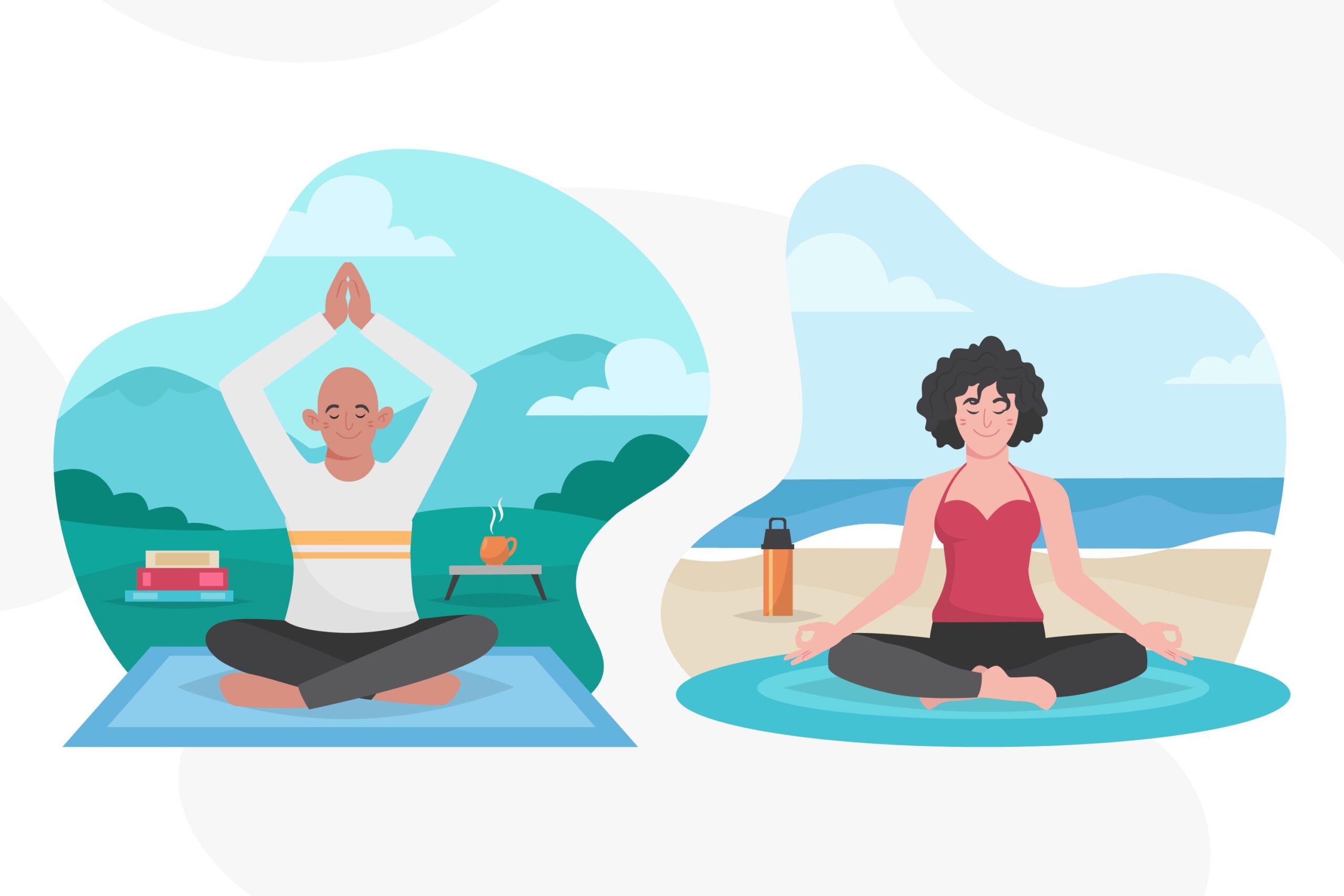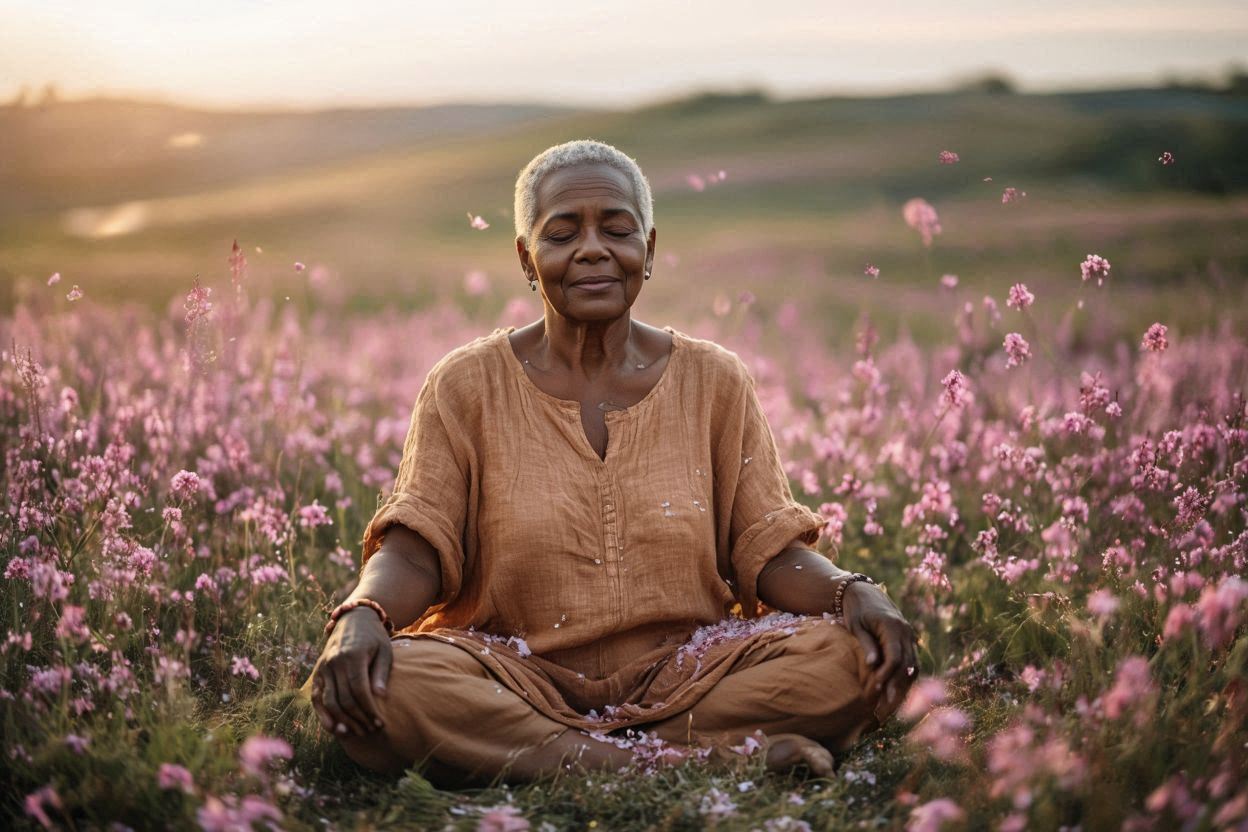
Inner peace isn’t something we “find.” It’s something we build — breath by breath, moment by moment, choice by choice.
For many of us, meditation began as a tool to calm anxiety, stop overthinking, soften trauma patterns, or ground ourselves when life felt overwhelming. That’s how it started for me, too. My journey into meditation wasn’t glamorous — it was necessary. If you’ve read my story on the About Me page, you know meditation became the rope I held onto when life felt like it was pulling me underwater. It helped me rebuild my identity, my safety, my self-belief, and eventually my spiritual strength.
And what I learned is this:
Inner peace doesn’t arrive by accident — it arrives through daily habits.
Habits that are simple.
Habits that are repeatable.
Habits that meet you where you are.
This article is about those habits — the ones that gently shift your nervous system, realign your energy, reconnect you with your breath, and slowly (but profoundly) transform how you move through the world.
Whether you’re new to meditation or deepening your practice, these daily meditation habits will help you create inner peace that lasts.
Affiliate Disclaimer
Some links in this article may be affiliate links, which means I may earn a small commission if you choose to make a purchase through them — at no extra cost to you. I only recommend products, books, or services that I genuinely believe can support your healing, mindfulness, or spiritual journey. Your support helps me continue creating free content for the Meditate4Calm community. Thank you.
1. Consistency Matters More Than Length
One of the biggest misconceptions about meditation is that it needs to be long to be effective.
But study after study shows that short, consistent meditation sessions rewire the brain far more reliably than occasional long ones.
A 2018 study published in Behavioural Brain Research found that even 13 minutes of daily meditation for 8 weeks improved attention, memory, mood, and emotional regulation.
But what’s even more powerful?
Even 3–5 minutes a day can meaningfully shift your nervous system.
When you meditate daily, your brain begins forming stability pathways — patterns that make calm your baseline rather than an exception.
Why consistency works:
- It strengthens neural pathways associated with peace
- Your nervous system becomes more resilient to stress
- Your emotional threshold expands
- You gain control over your internal rhythm
Think of it like brushing your teeth.
You don’t skip brushing because you don’t have 20 minutes.
You do a little — every day — because it matters.
If meditation feels overwhelming, remember this simple philosophy:
“A small daily meditation is more powerful than a perfect occasional one.”
If you want a gentle place to begin, you may enjoy my guide:
Tips For Maintaining Motivation To Meditate.
2. Create a Meditation Anchor Time

Your brain thrives on association, which is why meditating at the same time each day can be incredibly grounding. When you choose a consistent moment—right after your morning coffee, before opening your laptop, after your shower, before bed, or even during your lunch break—your mind begins to anticipate calm before you even sit down.
This is known as creating an anchor time.
Examples:
- Right after your morning coffee
- Before opening your laptop
- After your shower
- Before bed
- During your lunch break
A study from the University of Southern California found that habit formation is strongest when the behavior is linked to a consistent cue such as time of day or a specific routine.
To choose your anchor, start simple. Pick a moment when you’re least likely to be interrupted and pair your meditation with a habit you already have. Begin with just one minute, and allow your practice to expand at its own pace. As the rhythm becomes familiar, meditation transforms into instinct rather than effort.
3. Simplify Your Practice to Reduce Resistance

Let’s be honest — most people don’t actually struggle with meditation itself. They struggle with the pressure surrounding meditation. The pressure to sit perfectly, to silence the mind, to create a ritual, or to have ideal conditions every single time. But the truth is, none of that is required.
In fact, the most powerful meditation habit is also the simplest one: sit, breathe, observe. That’s it.
You don’t need perfect posture, a meditation cushion, incense, a quiet house, or a beautifully curated spiritual setup. Those things can enhance the atmosphere, sure — but they aren’t what create inner peace. Peace comes from presence, not aesthetics.
And when meditation feels difficult, the solution is almost always to simplify. One breath. One moment. One gentle return to yourself. No pressure, no expectations, just awareness.
If you want a simple practice for releasing emotional tension and let the past go, you may enjoy my free guided script: Mystic Meditation for Release.
4. Use the Breath as Your Everyday Reset Button

Meditation isn’t only something you do while sitting still. Your breath is a portable meditation tool — a built-in reset button that you carry with you everywhere. With just a few intentional breaths, you can shift your internal state and return to peace within seconds.
The science behind this is powerful. Slow, controlled breathing stimulates the vagus nerve, which activates your parasympathetic nervous system — the part of your body responsible for signaling safety, calm, and rest. One study published in Frontiers in Psychology found that paced breathing improves emotional regulation, reduces anxiety, and helps stabilize heart rate, all through simple rhythmic breathwork.
One of the easiest techniques is a quick reset breath:
Inhale for 4, hold for 2, exhale for 6.
Repeat this 3–5 times and you’ll feel your entire nervous system soften and recalibrate.
This breath reset is especially helpful:
- before replying to a stressful message
- when overwhelm starts building
- when your chest feels tight
- when your thoughts won’t slow down
- before an important meeting
- or even at a red light
Breathwork is meditation in motion — a way to anchor yourself without needing a cushion, a quiet room, or a formal practice. And the more you weave intentional breathing into your day, the more grounded, centered, and emotionally steady you become.
Here’s a beautiful 10-minute breathwork video that many find calming:
5. Let Your Practice Match Your Emotional State
Inner peace isn’t something you force. It doesn’t come from trying to sit perfectly still or pushing yourself into a state of calm. True peace comes from meeting yourself exactly where you are. Some days you may feel grounded enough to sit quietly for ten minutes. Other days, your nervous system may need a different kind of support — and that’s perfectly okay. Meditation is not rigid; it’s adaptive.
Your practice should shift with your emotional landscape.
When you feel disconnected, a body scan can help you reconnect with your physical presence and ease stress. When anxiety rises, grounding breathwork — especially longer exhales — signals safety to the brain. If your mind feels scattered, repeating a mantra can anchor your attention and steady your thoughts. And on days when restlessness takes over, gentle movement like walking meditation or slow stretching allows your body to settle so your mind can follow.
Mindfulness teacher Jon Kabat-Zinn describes this beautifully:
“Meditation is not about feeling a certain way. It’s about feeling the way you feel.”
When you honor your emotional reality instead of resisting it, meditation becomes a compassionate partnership with yourself. Let your practice be fluid, responsive, and kind — never forced.
6. Integrate Mini-Meditations Into Daily Life
Inner peace grows through repetition — not just in moments of stillness, but in the ordinary rhythm of everyday life. Meditation doesn’t have to be reserved for quiet rooms or dedicated sessions. You can meditate while washing dishes, walking to your car, drinking tea, showering, folding laundry, cooking, or even sitting at your desk. These simple moments become opportunities to reconnect with yourself.
One of the easiest ways to bring meditation into daily life is through a mini-meditation. Choose one ordinary task and turn it into a mindful ritual. Feel every movement. Notice each sound. Slow your breathing. Anchor into your senses and let the moment unfold without rushing.
This is how meditation shifts from something you “do” into a way of being — a subtle, steady presence that supports you throughout the day.
If you’re looking for simple daily affirmations to pair with these moments, read:
10 Affirmations for Deeper Meditation
7. End Each Day With a Soft Reflection

Reflection is one of the most underrated meditation habits we have. Inner peace doesn’t only arise from sitting in silence or focusing on your breath — it also grows when you notice the moments of calm that already exist in your day. When you train your mind to recognize peace, your nervous system begins to understand that safety and softness are available to you more often than you realize.
A simple yet powerful way to do this is by asking yourself each evening:
“What brought me peace today?”
This small question carries big impact. It reinforces the presence of calm in your life, builds gratitude, strengthens your sense of emotional safety, and gently trains your brain to seek out peaceful experiences automatically. Over time, this practice builds a mental library of tiny, grounding moments — the kind we often overlook — and those memories become inner resources you can draw from during stressful times.
Research published in The Journal of Positive Psychology shows that reflective gratitude practices can significantly improve sleep, emotional resilience, and overall life satisfaction. In other words, taking just a minute to acknowledge your peaceful moments creates measurable shifts in your well-being.
Reflection is a powerful bookend to your day — a soft landing place for your mind, a quiet reminder that peace is not something you’re chasing; it’s something you’re learning to notice.
8. Be Kind to Yourself When Your Practice Isn’t Perfect

Inner peace is not created through perfection — it’s created through compassion. You will have days when your mind feels loud and unsettled. You will have days when meditation feels impossible. You’ll skip days, get distracted, or feel frustrated with yourself. And yet, none of this erases your progress. These moments are part of being human, not signs that you’re failing.
In fact, it’s self-compassion that keeps your meditation practice sustainable. When you soften your expectations and allow yourself to be imperfect, you create the emotional space needed for real growth. Dr.
Kristin Neff, a leading researcher in this field, explains it beautifully:
“Self-compassion provides emotional safety, which is exactly what allows real change and growth to occur.”
If you want a deeper understanding of this, here’s a short video where she expands on the power of self-kindness:
So be gentle with yourself. You’re human. You’re healing. And meditation is not about mastery — it’s about building a relationship with your inner world, one compassionate moment at a time.
Frequently Asked Questions
1. How long should I meditate each day for inner peace?
Even 3–5 minutes can meaningfully shift your nervous system toward calm when practiced consistently. The real transformation comes from repetition, not duration.
2. What if my mind won’t stop racing?
A busy mind is completely normal — noticing it is the practice. Each time you gently return to your breath, you strengthen focus and build emotional resilience.
3. Can I meditate if I don’t feel calm?
Yes. Meditation helps create calm, making it an ideal tool for moments when you feel anxious, overwhelmed, or unsettled.
4. What’s the best time of day to meditate?
The best time is any time you can be consistent, whether it’s morning, before bed, or during a midday break. Your brain learns to associate that moment with peace, making meditation feel more natural over time.
Recommended Books That Go Deeper Into This Topic
These three books beautifully support the journey of creating inner peace:
1. The Miracle of Mindfulness by Thich Nhat Hanh
A gentle and beautifully written introduction to bringing mindfulness into everyday life. Thich Nhat Hanh uses simple stories and practical exercises to help you slow down, breathe, and find presence in ordinary moments — whether you’re washing dishes, walking, or sipping tea. It’s a grounding guide that reminds you inner peace is always within reach.
2. Wherever You Go, There You Are by Jon Kabat-Zinn
Jon Kabat-Zinn breaks mindfulness down into clear, accessible concepts that fit naturally into daily routines. Through short chapters and relatable examples, he shows how meditation can soften stress, deepen awareness, and bring more calm into your life. It’s a modern classic for anyone who wants mindfulness explained in a simple, practical way.
3. Radical Acceptance by Tara Brach
A powerful blend of psychology, meditation, and compassion, Tara Brach’s work helps you meet yourself with more kindness and understanding. This book teaches how self-judgment keeps us stuck — and how mindful awareness and compassion can create real emotional healing. It’s especially supportive for anyone working through old patterns, trauma, or self-doubt.
Closing

Inner peace grows when you create the smallest possible doorway back into yourself. Sometimes that doorway is just a single breath. Sometimes it’s a moment of honest reflection or a pause before reacting. And sometimes it’s simply the willingness to sit with yourself — even when your thoughts feel messy, loud, or uncomfortable. These tiny openings are powerful. They remind you that calm is not something outside of you… it’s a home you learn to return to.
Your meditation practice never needs to be perfect. It just needs to belong to you. Every time you choose presence — even for a few seconds — you strengthen the part of your mind and heart that knows how to settle, soften, and come back to center. Over time, these moments create a version of peace that feels natural, stable, and deeply your own.
I’d truly love to hear your experience in the comments.
What daily meditation habit has helped you the most?
Or, if you’re in a tender season, where are you struggling right now?
Your story matters more than you know. When you share your journey, you give someone else permission to feel seen in theirs — and that in itself is a form of healing.
With love,
Deeana — Meditate4Calm
Disclaimer
This article is for educational purposes only and is not medical or mental health advice. Meditation and mindfulness can support well-being, but they are not substitutes for professional care. Always consult a licensed healthcare provider regarding any questions or concerns about your physical or emotional health. Results vary for each individual.